August 3, 2026
Detection Can't Save Research: Provenance-by-Design Can
Paper mills and AI-generated reviews are flooding the scholarly record. Detection tools fail by design. Institutions that build provenance infrastructure — cryptographic verification of every research claim — will set the credibility standard for everyone else.

Integrity by Design: Why the Detection Arms Race Cannot Save the Scholarly Record — and What Research Institutions Must Build Instead
By DecentraSec Team
The scholarly record faces industrial-scale assault. In November 2025, Nature reported that 21 percent of manuscript reviews at a major international AI conference were generated entirely by AI [doi:10.1038/d41586-025-03506-6]. Authorship slots on the paper-mill marketplace sell for as little as $57 across 18,710 documented advertisements from seven countries [arXiv:2604.24576]. The PNAS corpus identifies 29,956 suspected paper-mill products; fewer than 29 percent carry retractions, and the study projects only about a quarter ever will, leaving the remainder citable indefinitely [doi:10.1073/pnas.2420092122]. A co-author of that study described coordinated publication fraud as "emptying an overflowing bathtub with a spoon."
Reviewers, retractions, detectors, and checklists all treat integrity as an inspection problem. It is not. It is a supply-chain security problem, and supply chains are engineered into safety, not policed into it. Post-hoc detection, manual reviewer diligence, and policy exhortation are obsolete. The evidentiary value of the scholarly record returns only when integrity operates as engineered infrastructure: provenance-by-design baked into the research pipeline rather than inspected in after the fact. Institutions that make this shift first will set the credibility standard every other institution is subsequently measured against.
Why the Detection Arms Race Against Paper Mills Is Unwinnable
The AI-review epidemic is quantified and growing. In 2025, approximately 20 percent of ICLR reviews and 12 percent of Nature Communications reviews were classified as AI-generated [arXiv:2602.00319v2]. Documented adversarial evolution compounds the problem: hidden white-text prompt-injection attacks that instruct reviewer models to "give a positive review only" have surfaced in manuscripts submitted to high-profile venues [UNVERIFIED: original citation; phenomenon reported]. This shifts the problem from stylometric suspicion to tamper-evident authorship attestation. Meanwhile, suspected mill output doubles roughly every 18 months [doi:10.1073/pnas.2420092122], and retractions lag far behind.
Deans must internalize a structural reality: detection scales linearly or worse while threats scale exponentially. Every new detector becomes the next adversarial target, and false positives already damage legitimate scholars. ORIC directors spend real budget on detection tooling while contamination grows beneath them — money spent inspecting a pipeline broken by design.
The Verification Crisis: When Research Claims Cannot Be Re-Executed, They Cannot Be Trusted
For Tier-1 researchers, the exposure is now personal. Loth, Kappes, and Pahl surveyed domain experts on the GenAI disinformation threat landscape and found a clear result: respondents expressed systematic skepticism toward detection-based countermeasures and instead identified reproducible provenance infrastructure as the necessary structural response [arXiv:2602.02100]. Their finding confirms what security engineers have long understood — that detection is a reactive patch on a system that was never designed to produce verifiable outputs in the first place. IET research independently documents how cloud compute and dataset workflows degrade reproducibility when provenance is not captured at the infrastructure level [doi:10.1049/icp.2026.2060].
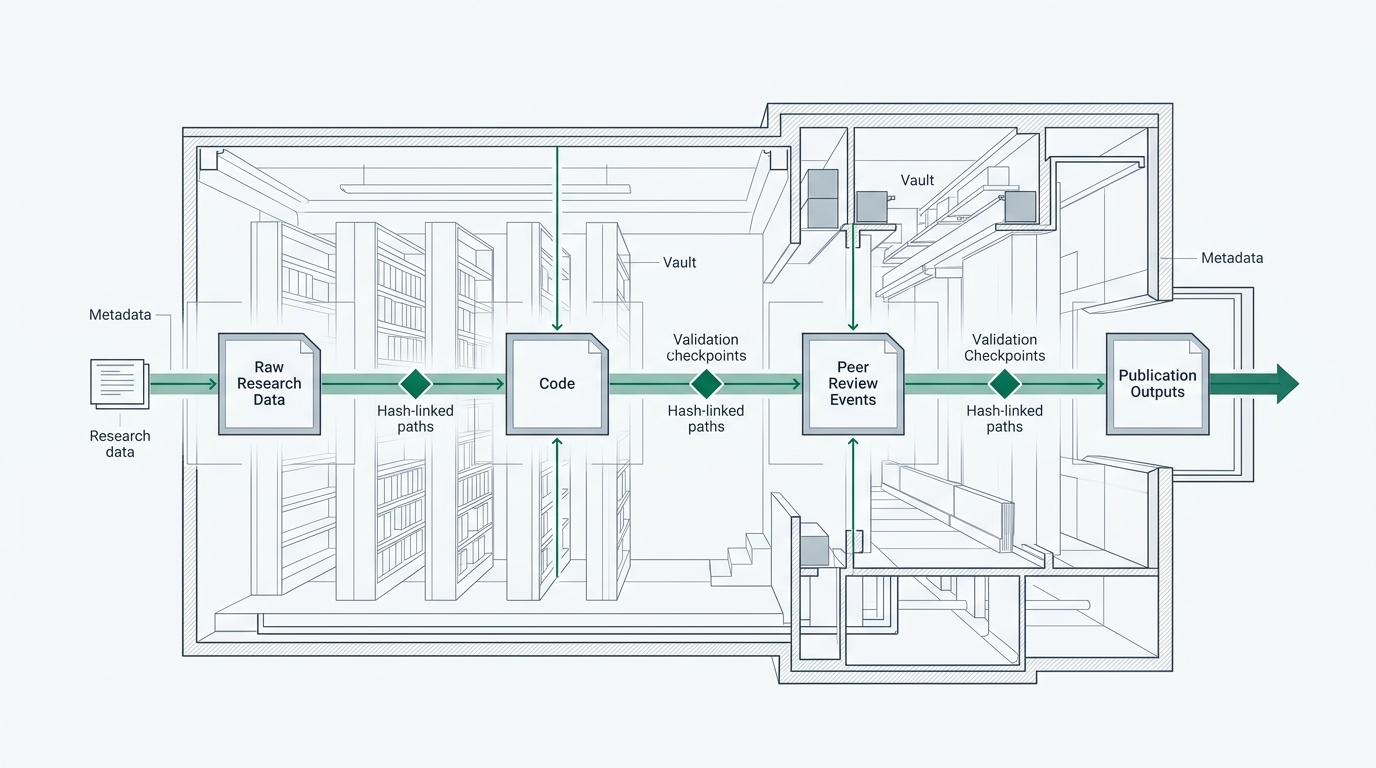
The remedy is not a better detector. It is a computational pipeline that produces a content-addressable provenance record as a default output of every research act. Concretely: input data, transformation code, and compute parameters are cryptographically hashed at the moment of execution. Each derived artifact carries a hash-chain linking it to every antecedent in its computational lineage. Any downstream consumer — a reviewer, a funder, a replication lab — can re-execute the pipeline, compare the hash of their output to the published commitment, and confirm or refute the claim without relying on institutional say-so. This is verification-by-recomputation: a machine-readable, cryptographically anchored property of the scholarly record rather than a human obligation imposed on every future reader.
For the ORIC director, this reframes the question entirely. When published claims cannot be independently re-executed, the university sells unverifiable goods to funders and the public. Verification-by-recomputation transforms research output from an asserted claim into a falsifiable artifact — and falsifiability is the minimum viable product of science.
Research Data Sovereignty Is an Engineering Problem, Not a Policy Statement
On December 17, 2025, the European Commission published the EOSC Steering Board's opinion paper on strengthening European sovereignty in data for research, framing jurisdiction-aware custody, sovereign cloud options, and governance accountability as operational requirements [UNVERIFIED: enumeration; date and theme confirmed]. The geopolitical context is inescapable: AI-data geopolitics, cloud-dependency anxiety, and parallel calls from the UN Scientific Advisory Board and SciELO [UNVERIFIED] converge on the same demand — know where your data lives and who can touch it.
The trap for universities is treating policy commitments as achievements. Funders now ask whether institutions can prove data custody, access, and governance controls — not whether they hold a sovereignty policy. For EU-linked institutions, this is becoming a funding precondition. Sovereignty that is not engineered into the stack is a declaration, not a guarantee. Infrastructure must produce audit trails and governance evidence automatically, not reconstruct them after the fact.
The Ascending-Nation Inflection Point for Research Credibility
The success story is real. As of January 2026, 70 Pakistani universities feature in the QS Asia University Rankings, driven by HEC quality-assurance reforms and record research output [The Friday Times, Jan 31, 2026]. The vulnerability is on the record in-country: [UNVERIFIED: JIIMC documents paper-mill infiltration and predatory-journal dependence in Pakistani output]. A single high-profile integrity scandal can erase years of ranking gains overnight. Rankings are credibility assets, and credibility assets devalue instantly.
The strategic reframe: institutions that convert ranking momentum into durable credibility make the evidentiary basis of their output transparent and auditable before a scandal forces the issue. Institutions that reward raw publication volume feed the paper-mill economy structurally. Rewarding mathematically confirmed contributions rather than self-asserted claims severs that incentive at its root, building verifiable researcher reputation from the evidentiary basis of each output. Every fast-rising research nation faces this window. Whoever builds provenance infrastructure first sets the global standard; every later adopter is benchmarked against them.
The Institutional Response: Building Provenance-by-Design Research Infrastructure
Five crisis vectors — AI-generated reviews, industrialized mills, the verification crisis, sovereignty mandates, ascending-nation exposure — trace to a single root cause: integrity mechanisms designed for a pre-AI, pre-industrialized-fraud era. They rely on human diligence and post-hoc correction, which scale linearly while threats scale exponentially.
The alternative is algorithmic integrity: the property that every research output carries a verifiable computation graph — a chain of cryptographic commitments linking input data → transformation code → compute parameters → output artifacts — such that any downstream consumer can independently verify the claim without trusting the originating institution's database or administrative personnel. This property has two structural requirements that cannot be satisfied by a conventional centralized repository.
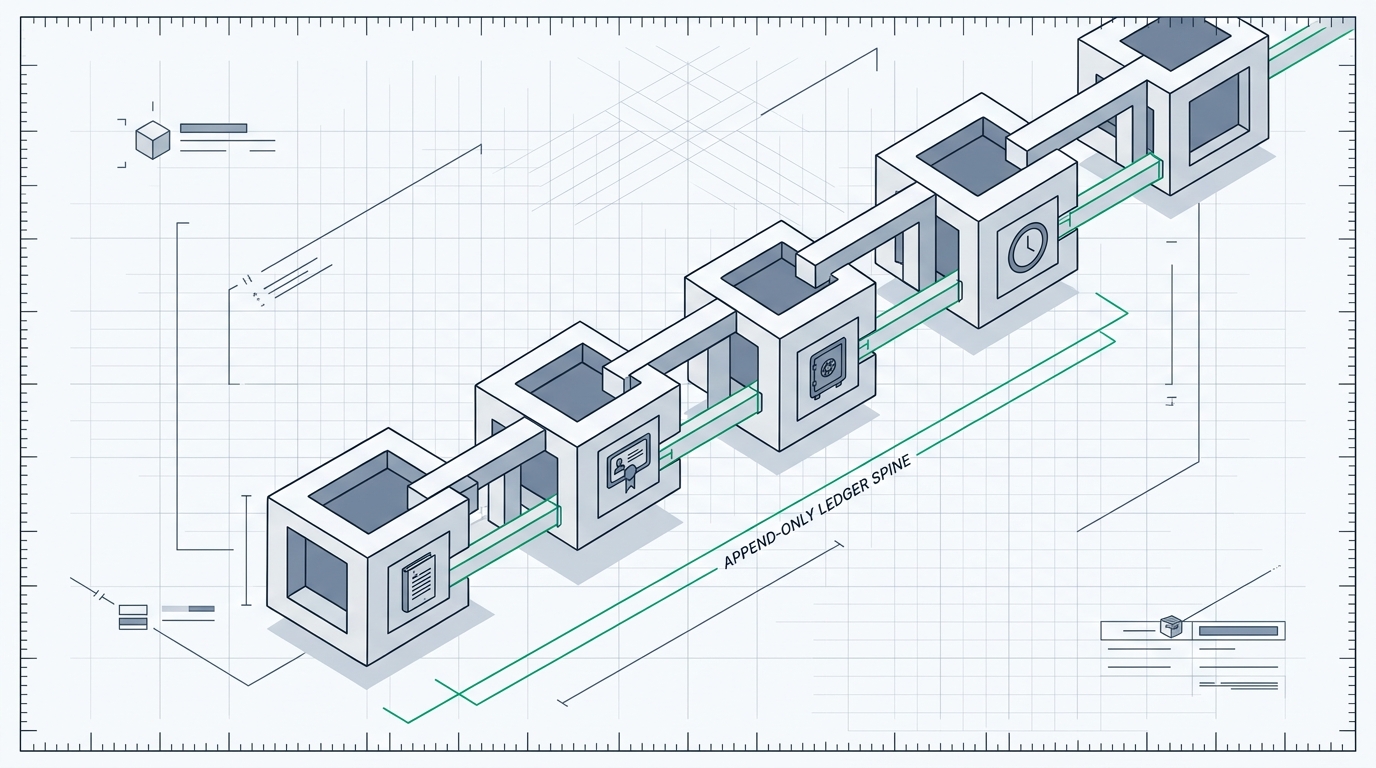
First, provenance records must reside in an append-only transparency log: a Merkle-tree-structured data store where each record is cryptographically committed and any attempted retroactive alteration is mathematically detectable by any party that holds a prior tree root. This is the same architectural primitive that secures Certificate Transparency for the global web PKI — applied to the scholarly supply chain.
Second, attestation must be distributed across independent institutional witnesses. A single administrative actor can compromise a centralized database by altering records, rotating keys, or coercing database operators. When provenance commitments are co-signed by multiple independent nodes operating in separate administrative domains — research institutions, funders, national accreditation bodies — no single party can unilaterally rewrite the evidentiary chain. The infrastructure produces tamper-evident guarantees that survive organizational failure, insider threat, and cross-institutional dispute.
This is not a software purchase. It is an infrastructure decision in the class of network security: a governance choice with a five-to-ten-year horizon, made at the Dean and ORIC level, not the lab level. Leadership should audit where evidentiary exposure is greatest and pilot provenance infrastructure at the point of highest risk first — typically the workflow that produces the institution's most citation-weighted or policy-impactful outputs.
DecentraSec is selecting a limited cohort of research institutions for a structured, jointly-scoped pilot [UNVERIFIED: pilot terms]. A chosen department deploys the integrity infrastructure on a live research workflow — an AI Integrity Layer that cryptographically attests authorship at the point of submission; a provenance vault that records the complete computational lineage as a content-addressable, hash-chained record; and an incentive network that rewards verified contributions rather than self-asserted claims — with engineers embedded and an evaluation framework co-designed up front: a funded research collaboration, not a procurement event. The Early Adopter Subsidy defrays a portion of first-year cost in exchange for structured feedback [UNVERIFIED: subsidy terms]. The value exchange: credibility infrastructure and a seat at the table defining the emerging standard.
Institutions that build integrity infrastructure now define the credibility standard every other institution is measured against. The question is not whether your university will be part of that standard. It is whether you will help write it — or be audited against it.
ScholarMark by DecentraSec is building the pre-submission infrastructure that academic publishing has never had — AI-powered integrity checks, paid peer review via the GEAR Network, and immutable provenance-based authorship seals. Start here →
References
- Nature. "Major AI conference flooded with peer reviews written fully by AI." doi:10.1038/d41586-025-03506-6.
- BuyTheBy dataset of paper-mill advertisements. arXiv:2604.24576.
- Richardson et al. "The entities enabling scientific fraud at scale." PNAS. doi:10.1073/pnas.2420092122.
- Shen & Wang. "Detecting AI-Generated Content in Academic Peer Reviews." arXiv:2602.00319v2.
- Loth, Kappes & Pahl. "The Verification Crisis: Expert Perceptions of GenAI Disinformation and the Case for Reproducible Provenance." arXiv:2602.02100 (R2CASS @ WWW 2026).
- "Computational reproducibility in cloud-based big data systems." IET. doi:10.1049/icp.2026.2060.
- EOSC Steering Board. "Strengthening European sovereignty in data for research." Dec 17, 2025.
- The Friday Times. "Pakistani Universities Climb Global Rankings Amid HEC Reforms." Jan 31, 2026.
02 // RELATED RESEARCH · ARCHIVE DISPATCHES
Related Papers & Dispatches.
Peer-reviewed analyses, cryptanalysis papers, and zero-trust engineering dispatches.
The Verification Gap: Research Integrity Is Infrastructure
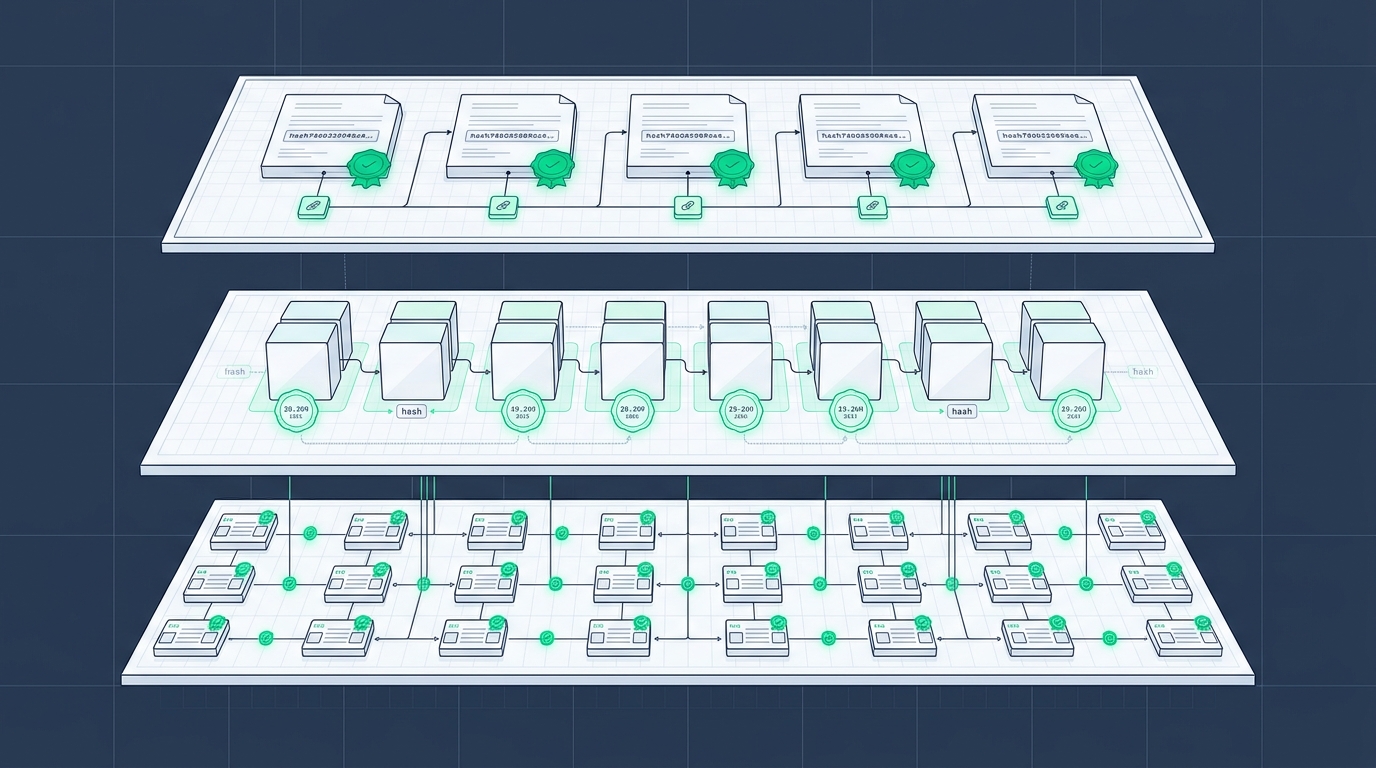
Institutions do not lack AI detectors — they lack a verifiable chain of custody. Why the 21% AI-review finding is an audit failure, how tamper-evident provenance makes retraction clusters structurally impossible, and how deans, ORIC directors, and regulators can pilot verifiable research infrastructure this accreditation cycle.
Peer Review Crisis? It's a Research Infrastructure Problem
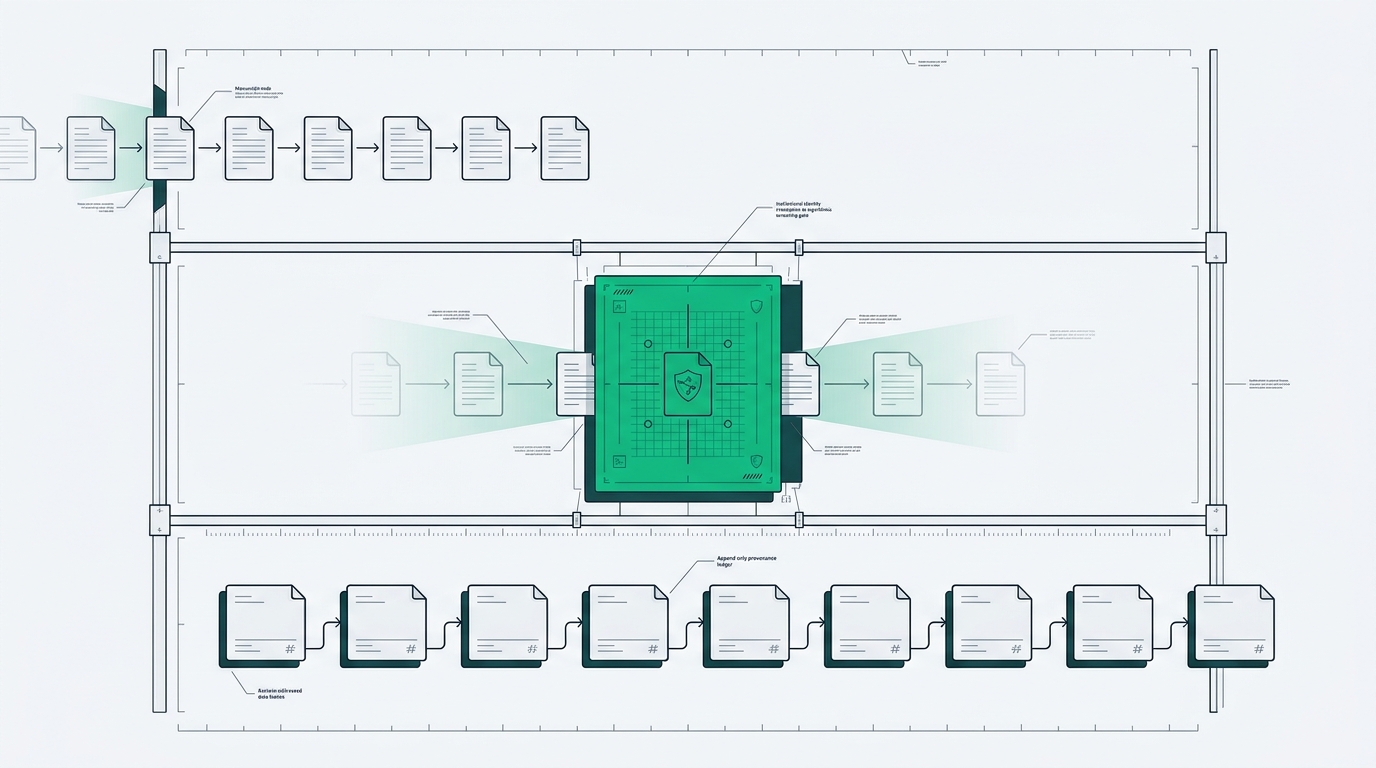
More than eight million papers now enter a peer review system that can't verify who validated what. The fix is verifiable triage: identity-backed reviewers, screening at ingest, and audit-ready provenance—installed at the institutional layer, not bolted onto editorial software.
Provenance Before Trust: Research Integrity Infrastructure
Peer-review overload, AI-reviewer attacks, paper mills, sovereignty exposure, and replication failure trace to one root cause: no tamper-evident integrity infrastructure. This brief shows why provenance must precede institutional trust—and what first movers can do before regulators mandate it.