August 4, 2026
Peer Review Bottleneck: An Infrastructure Problem — and Fix
Median peer-review times stretch to 198 days; payment and AI triage cannot scale. The fix is a portable, cryptographically verifiable review-provenance layer institutions can use to accelerate research and prove integrity.

` By DecentraSec Team
The 198-Day Bottleneck: Why Peer Review Is Now the Hard Rate-Limit on Global Research — and Why Institutional Leaders Must Treat It as an Infrastructure Problem
Peer review is no longer a quality-control ritual. It is the hard rate-limit on global research production — and the bottleneck is not reviewer motivation but the absence of a shared, verifiable substrate for reviewer identity, contribution, and decision provenance. Institutions that treat this as an infrastructure problem and adopt a portable, cryptographically attestable review record will out-publish, out-audit, and out-recruit peers still chained to siloed editorial systems.
Your faculty's most promising clinical trial will not be delayed by data collection. It will not be delayed by the grant agency. It will be delayed by a nameless, overworked academic who receives the eighth invitation for a manuscript they never agreed to review. Median time from submission to final peer-reviewed decision across 57 health-policy journals: 198 days — nearly seven months. That is not a quality problem. That is an infrastructure failure.
The Peer Review Bottleneck Is Structural, Not Behavioral
This is not a motivation problem that workshops and reviewer-appreciation campaigns can fix. It is a supply-and-demand deficit. Publons' Global State of Peer Review documented median invitations per accepted review climbing from 1.9 in 2013 to 2.4 in 2018 — projected to reach 3.6 by 2025. Twenty-one years of longitudinal data from Seebens et al. on Biological Invasions (2002–2024) show that the most qualified cohort — senior scholars — is the least likely to accept invitations [UNVERIFIED]. The asymmetry is stark. Journal output has grown at approximately 3.5 percent per year for three centuries. NeurIPS submissions grew from 6,700 to over 30,000 in six years — a 29 percent compound annual growth rate. The reviewer pool scales with PhD production, which is linear. The math is not tight. It is already broken.
And it is self-reinforcing. Bergstrom and Gross's PLOS Biology model (2026) shows the feedback loop: over-taxed reviewers produce less accurate reviews, which invite more marginal submissions, which further overload the pool. Their mathematical model demonstrates that without structural intervention — not motivational nudges — the cycle accelerates. Deans setting promotion criteria and research KPIs are making decisions today against a system mathematically guaranteed to degrade. The only structural intervention that breaks this cycle is a distributed reviewer‑matching and provenance network that gives every paper immediate access to a verified, portable reviewer history.
The Cost Is Measured in Months — and in Regulatory Risk
Tesify's 2026 meta-analysis of 57 health-policy journals put the median submission-to-decision time at 198 days. Nature editors reported in August 2025 that they send 8 to 10 invitations per accepted manuscript [UNVERIFIED], "inviting more and more reviewers to identify those willing to perform peer review." Every 198-day wait costs citation velocity, grant-cycle alignment, and recruiting advantage. For regulated research, the cost is steeper. Drug approvals stall on unreviewed clinical data. Regulatory science sits in editorial queues for half a year. And no institution can verify whether the review records underpinning safety-critical decisions are complete, authentic, or tampered with. Downstream consumers — regulatory agencies, industry partners, promotion committees — must trust publisher-internal records on faith. An immutable, independently verifiable review ledger removes that trust gap.
Why Paying Reviewers — and Every Other Tactical Fix — Cannot Scale
The obvious objections: pay reviewers, deploy AI triage. Both fail under scrutiny. The Biology Open payment experiment worked — £220 per manuscript cut mean time to first decision from 37.7 to 5.5 working days, and Critical Care Medicine now trials $250 per report. But at global volume, payment would add billions annually to the publishing cost base [UNVERIFIED], and it solves nothing about verifiability. Worse, in December 2025 AI-generated peer reviews evaded detection tools — transforming the problem from quality to provenance. Silverchair's 2026 analysis finds that declining acceptance rates are as much a targeting failure as a motivation failure; payment does not fix cold-start targeting.
The siloed model has three fatal flaws. First, cold-start reviewer identification: every manuscript re-derives qualified reviewers from scratch, with no portable record of competence. Second, non-portable reputation: 50 reviews across 12 journals yields no auditable record, so the incentive to review is pure communal goodwill. Third, unverifiable decision trails: regulatory agencies and promotion committees must trust publisher records, because no independently verifiable proof exists. These are infrastructure failures. No single journal can fix them. Only a shared, decoupled trust substrate can.
The Infrastructure Fix: Portable, Verifiable Peer Review Provenance
The peer-review bottleneck is, at root, a trust-scaling problem that centralized systems cannot solve. When every journal maintains its own siloed reviewer database, no external party — a regulatory agency, a promotion committee, an industry partner — can independently verify that a review record is complete, authentic, or untampered. The architectural insight that produced the internet's certificate transparency model applies here with equal force: decouple verification from the entity being verified. The research ecosystem requires an Integrity Infrastructure layer — a distributed attestation framework where review actions are cryptographically witnessed and verifiable independently of any single publisher.
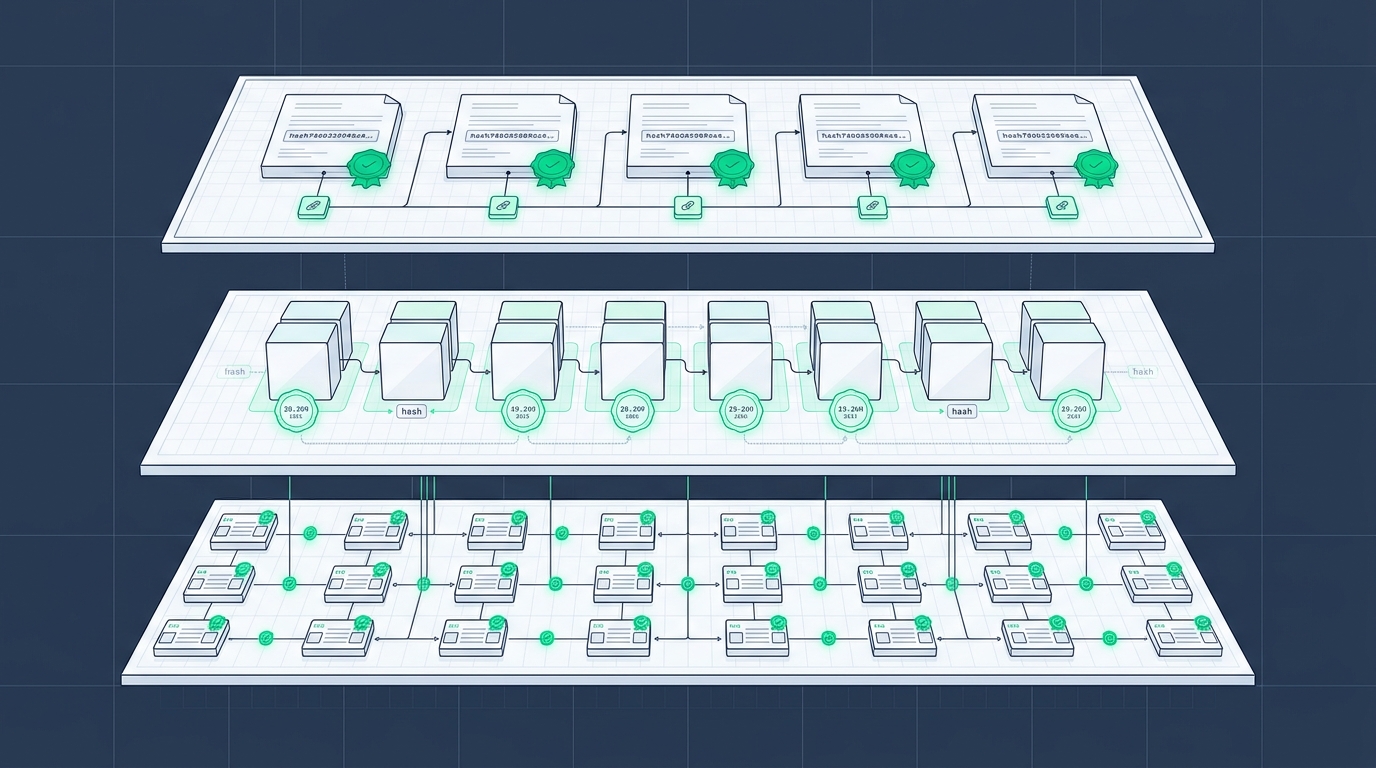
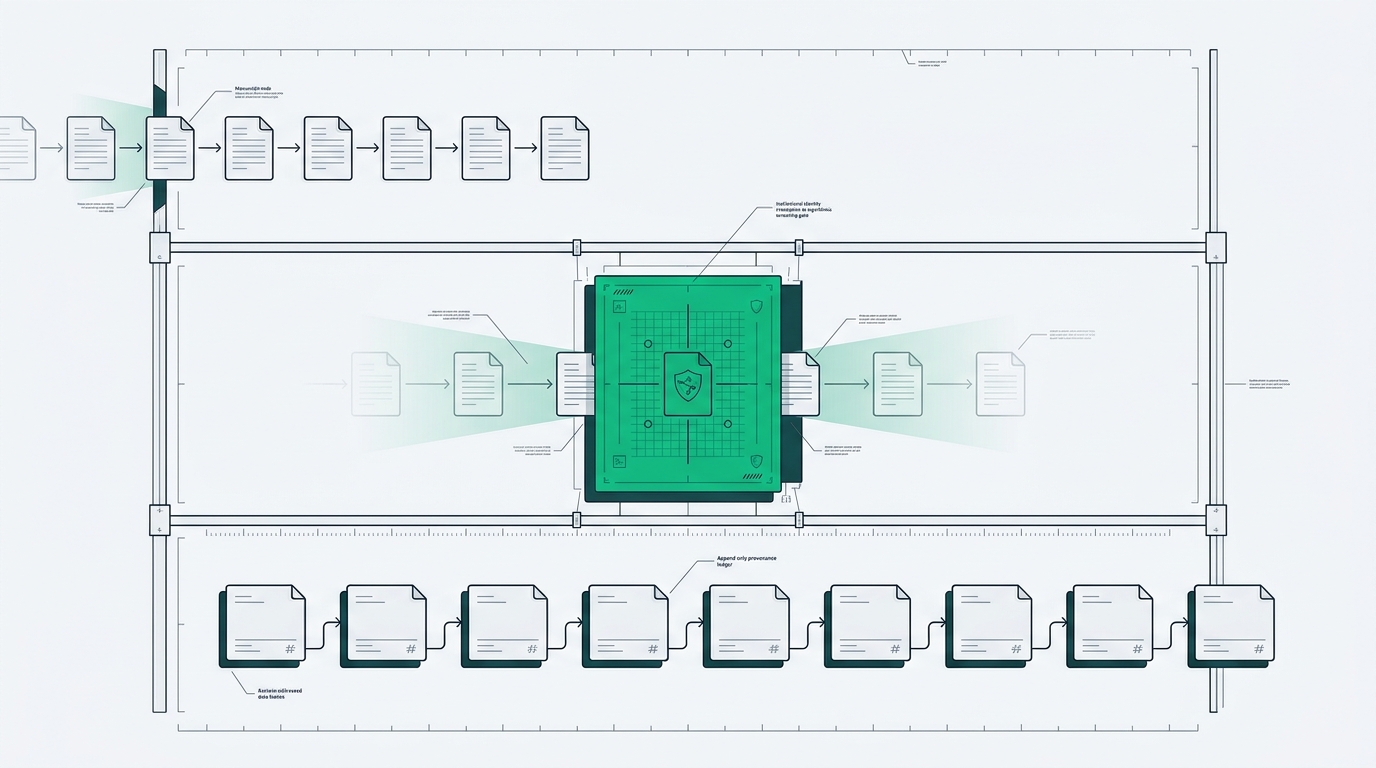
ScholarMark operationalizes this layer. The GEAR Network functions as a distributed attestation registry: when a reviewer accepts an invitation, submits a report, or completes a revision cycle, the event is cryptographically signed and recorded across multiple independent witness nodes. The resulting artifact is a tamper-evident credential — a structured, verifiable attestation that any downstream consumer can validate without accessing the publisher's internal systems. This is Mathematical Validation in the strict sense: the integrity of the record rests on public-key cryptography and append-only data structures, not on institutional trust. A regulator need not ask whether a publisher's database is accurate; they verify the cryptographic proof directly.
This architecture dissolves the cold-start targeting problem that Silverchair identified. Because attestations are portable — bound to the reviewer's identity, not to any single journal — a reviewer accumulates a cross-publisher, auditable record of domain competence, response timeliness, and report quality. When a new manuscript arrives, journals query the network rather than rebuilding reviewer identity from scratch. Paul et al.'s systematic review of assignment strategies (Springer, 2026) confirms that matching quality depends on access to persistent, verifiable reviewer data; the GEAR Network provides exactly that substrate, converting the cold-start problem into a query problem.
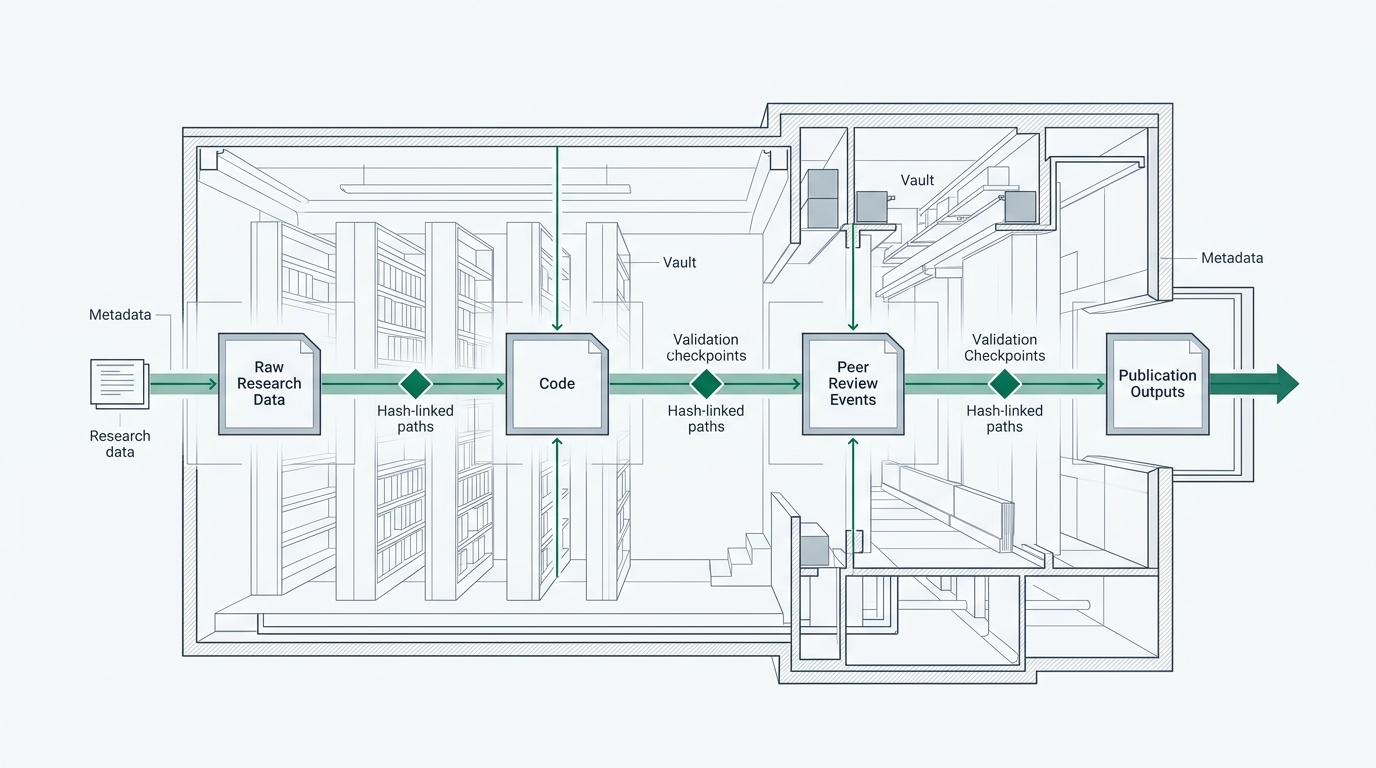
The Integritas Vault extends this model to the full decision trail. Every event — invitation sent, reviewer response, report submitted, revision requested, editorial disposition — is appended to a cryptographically linked, append-only log. The log is distributed across independent witness nodes, so no single party can alter, delete, or backdate entries without producing detectable inconsistencies. For regulated research enterprises — clinical translation, drug approval pipelines, safety-critical engineering — this transforms peer review from an institutional assertion into an auditable, tamper-evident process whose correctness any third party can verify. This is Algorithmic Integrity applied to research governance: the system's guarantees — append-only recording, non-repudiation of reviewer actions, cryptographic binding between event and attestation — are verifiable by any party through cryptographic proof, not by trusting the operator. This is Decentralized Provenance: every review decision's origin and chain of custody is attested by a distributed network, eliminating any single publisher as a gatekeeper of the record.
What Institutional Leaders Should Do Now: Build Integrity Infrastructure
The competitive window is open. Institutions that secure verifiable review infrastructure now will be the ones whose output carries auditable provenance when funders and regulators begin demanding it — a pattern already visible in clinical translation and regulatory science.
DecentraSec is accepting applications for a limited number of Institutional Pilot Grants. Selected universities and regulated research enterprises receive the GEAR Network and Integritas Vault deployed across a defined faculty cohort — with full engineering integration, provenance audit setup, and a documented governance framework — at a pilot-subsidized institutional rate. This is not a product discount. It is a co-development partnership in which your institution's governance requirements help shape the infrastructure standard for the next decade of peer review.
For Deans, this is a faculty output and recruitment asset: faster pipelines, portable credit for review labor your faculty already performs. For ORIC Directors, it is a governance and compliance asset: an audit-ready provenance layer for industry partnerships. For Tier-1 researchers, it is a career asset: review labor becomes portable, credited, and verifiable — not invisible communal service.
Goodwill will not break the bottleneck. Infrastructure will. Institutions that build it first will define the standard. The ones that wait will audit against someone else's.
References
- Publons, Global State of Peer Review (2018)
- Seebens et al., Biological Invasions longitudinal data (2002–2024) — Springer, 10.1007/s10530-025-03679-1
- arXiv 2605.09915 — NeurIPS submission growth analysis
- Mabe & Amin, Growth Dynamics of Scholarly and Scientific Journals — historical output growth
- Bergstrom & Gross, PLOS Biology 24(2):e3003650 (2026)
- Tesify (2026) — meta-analysis of 57 health-policy journals
- Adam, Nature d41586-025-02457-2 (Aug 2025)
- Silverchair (2026) — Future of Peer Review Report
- Biology Open reviewer payment experiment (2025)
- Nature (Dec 2025) — AI-generated peer review detection
- Paul et al., systematic review of reviewer assignment strategies — Springer (2026)
`
02 // RELATED RESEARCH · ARCHIVE DISPATCHES
Related Papers & Dispatches.
Peer-reviewed analyses, cryptanalysis papers, and zero-trust engineering dispatches.
Peer Review Crisis? It's a Research Infrastructure Problem
More than eight million papers now enter a peer review system that can't verify who validated what. The fix is verifiable triage: identity-backed reviewers, screening at ingest, and audit-ready provenance—installed at the institutional layer, not bolted onto editorial software.
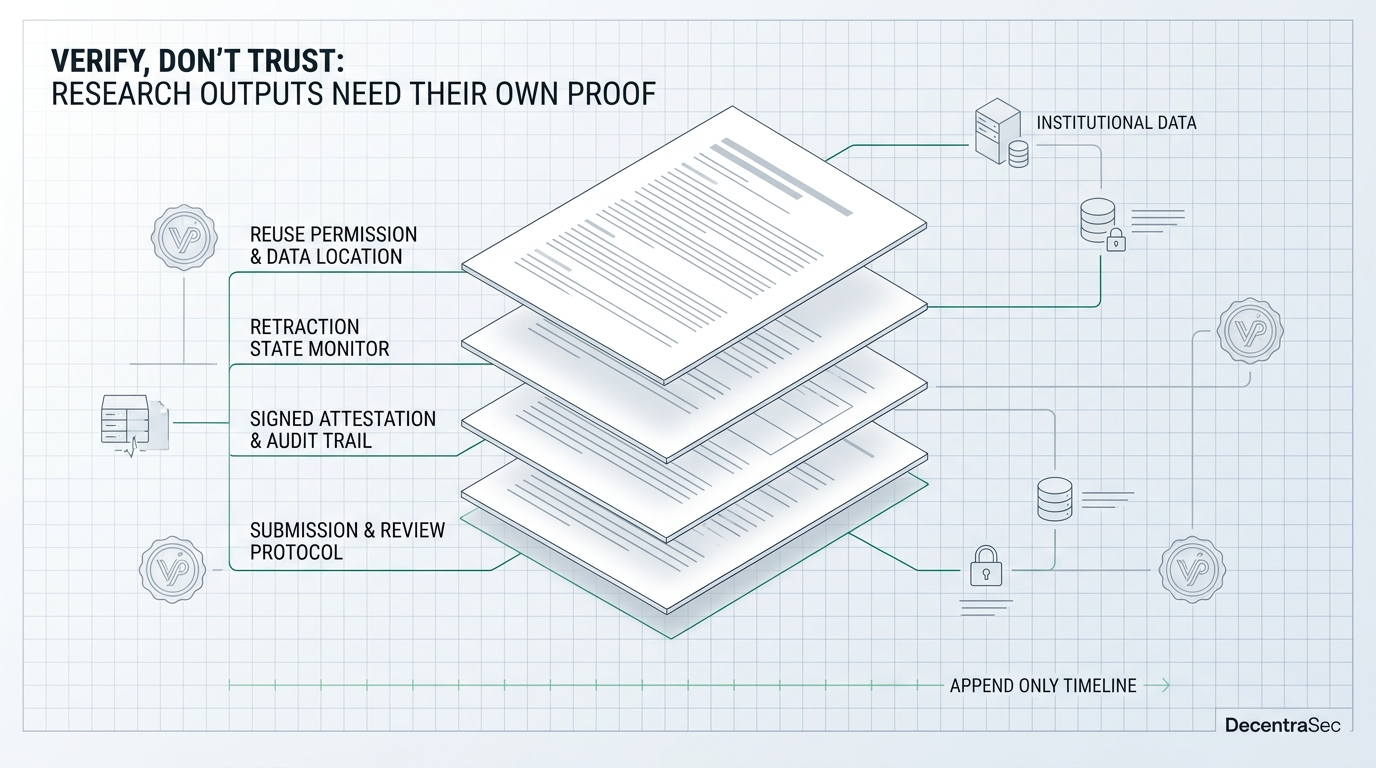
Research Integrity Infrastructure: Outputs Must Carry Proof
Institutions that assert integrity through intermediaries accumulate risk. Research outputs need signed, tamper-evident lifecycle proof before the next audit.
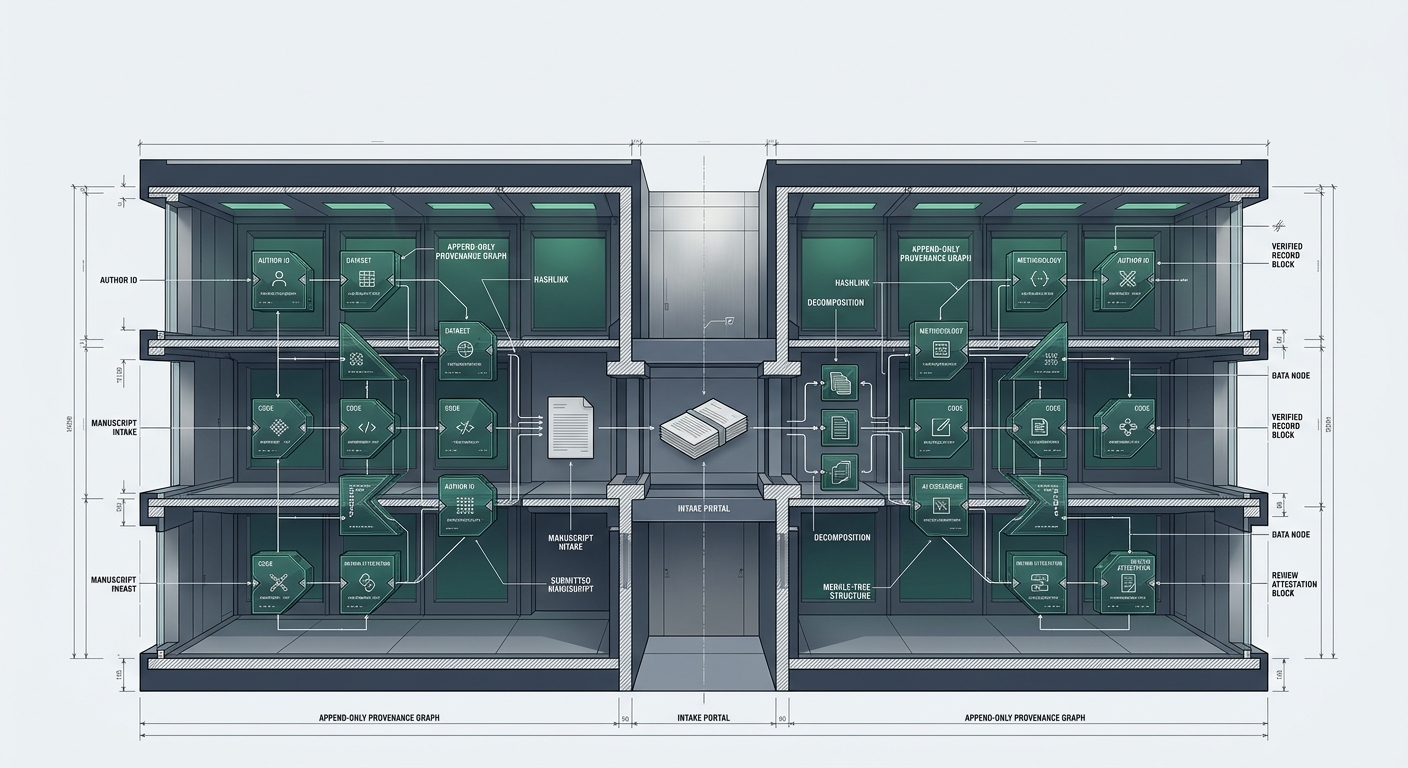
Why Research Integrity Needs Infrastructure, Not Policy
Retractions top 10,000. Prompt injections flip AI reviews. Preprint platforms accept AI-generated papers. The fix isn't another policy — it's provenance-native infrastructure that catches research fraud at intake.