May 21, 2026
The End of the Silicon Era: Why the Future of AI Runs on Sound
New type of GPU that Save Humanity (Researched by DecentraSec)
By Fahad H. Ghouri
We are hitting a physical wall in artificial intelligence. As we push toward ubiquitous Agentic AI and massive local Large Language Models (LLMs), the bottleneck is no longer just software or data availability. It is thermodynamics.
If you want to deploy a 20B+ parameter model locally for true data privacy, you immediately face a hardware reality: standard silicon GPUs require massive power draw and generate extreme heat. We have to stop forcing electrons through microscopic wires and look to a completely different medium of computation.
We need to look at Phononic Computing—processing data not with electricity, but with sound.
The Thermal Wall: A Problem of Physics
The fundamental issue with modern GPUs is electrical resistance. When you move electrons through a silicon matrix to perform the billions of calculations required for AI inference, you encounter friction. This is governed by Joule’s First Law of heating:
P = I²R
Where P is the heating power, I is the electrical current, and R is the electrical resistance. As transistors shrink to the nanometer scale to pack more compute power into a chip, resistance density increases. This is why AI data centers consume power at the scale of entire nations. If we want to bring AI out of the cloud and into secure, offline edge devices, we cannot bring the heat with it.
What is Phononic Computing and How Does it Work?
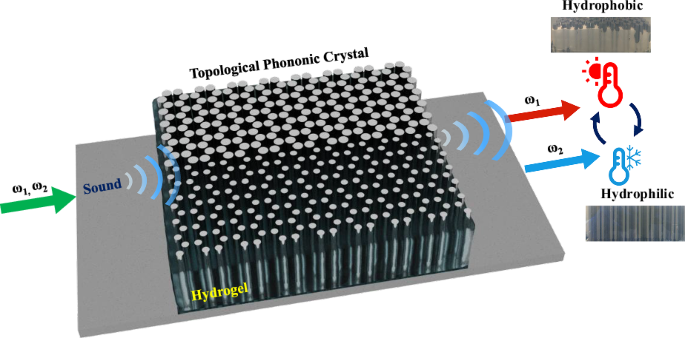
Phononic computing replaces electrical transistors with an engineered crystal lattice. Instead of using a voltage high/low to represent data, it uses mechanical vibrations—nanoscale sound waves, or "phonons"—traveling through a material.
Because a phononic chip transfers kinetic energy rather than forcing electrons through a resistive barrier, the R (resistance) in our power equation effectively vanishes. The result is a computational substrate that generates virtually zero heat.
How Sound Does the Math: Running an LLM fundamentally requires massive matrix multiplication. A digital silicon chip does this sequentially. An acoustic chip does this analogously and instantly using the physics of wave interference.
When two sound waves meet in an engineered acoustic waveguide, they interact according to the principle of superposition:
y(x,t) = y₁(x,t) + y₂(x,t)
This physical interaction creates natural logic gates based on phase differences (φ):
Constructive Interference (Logic 1): When two waves are in phase (φ₁ = φ₂), their amplitudes add together, creating a stronger wave.
Destructive Interference (Logic 0): When waves are exactly out of phase (|φ₁ - φ₂| = π), they cancel each other out, resulting in silence.
To run an AI model, you map the neural network's weights to the physical geometry of the acoustic channels. You input the data as a complex sound wave. As the wave propagates, splits, and interferes with itself through the physical structure of the chip, the wave that exits the other side is the mathematical solution.
From Concept to Product: The Acoustic AI Co-Processor
How does this actually become a product you can buy? It won't replace your CPU for running an operating system. Instead, it will be packaged as an Acoustic AI Co-processor (or a Sound GPU).
It will be a miniaturized chip integrated into edge devices—phones, secure local servers, or defense hardware. The traditional silicon handles basic computing, but the moment you query a heavy AI agent, the task is routed to the acoustic chip, which calculates the inference passively at the speed of sound.
Why it is fundamentally better than current silicon:
Micro-Watt Power & Zero Heat: Without the need for massive heatsinks or cooling fans, you can deploy powerful LLMs on miniaturized edge devices silently.
Massive Frequency Multiplexing: You can run thousands of different sound frequencies simultaneously through the exact same channel without interference. This allows multiple AI agents to run on the same physical chip at the same time.
EMP & Radiation Immunity: Because a phononic chip does not rely on stored electrons to hold memory or process logic, it is inherently immune to Electromagnetic Pulses (EMP) and severe radiation—making it the ultimate hardware for space and defense sectors.
The Current Landscape: Startups Leading the Charge
This is no longer theoretical physics. The transition from digital silicon dependence to acoustic computing is actively underway, heavily backed by defense and venture capital.
Cortisonic: Emerging from stealth in early 2026, this deep-tech startup (spun out of the University of Queensland) is commercializing "Sonic Processing Units" (SPUs). Backed by Main Sequence Ventures, they have successfully manufactured chips with 10,000 interconnected phononic nodes using standard semiconductor fabrication.
Defense Sector Validation: Lockheed Martin and the Australian Department of Defence recently formed a $3.2 million strategic partnership with Cortisonic to validate this technology for resource-constrained environments. The appeal is clear: mission-critical edge assets (drones, wearables, tactical networks) require real-time inference without massive power supplies.
Building the Future at DecentraSec
Hardware defines the absolute limits of security and privacy. As phononic computing moves from the lab to the enterprise market, it will unlock the holy grail of AI: powerful, heatless, offline inference that is mathematically shielded from centralized data breaches.
At DecentraSec, our core focus is securing the modern AI/ML stack through decentralized, zero-trust architecture. We are building the software infrastructure for a decentralized, secure AI future, ensuring that as next-generation hardware like Sound GPUs comes online, the trust layer is already established.
Let’s build the future of secure AI. Explore our infrastructure and vision at DecentraSec.com.
References & Further Reading:
Forbes Australia (Feb 2026): "Brisbane startup Cortisonic emerges from stealth with a chip built on sound, not electricity."
University of Queensland Faculty of Science (Feb 2026): "UQ quantum research spins out Cortisonic after 13 year collaboration with Lockheed Martin."
arXiv Research (Nov 2025): "Acoustic neural networks: Identifying design principles and exploring physical feasibility."
arXiv Research (Mar 2026): "Expectation and Acoustic Neural Network Representations Enhance Music Identification from Brain Activity."
02 // RELATED RESEARCH · ARCHIVE DISPATCHES
Related Papers & Dispatches.
Peer-reviewed analyses, cryptanalysis papers, and zero-trust engineering dispatches.
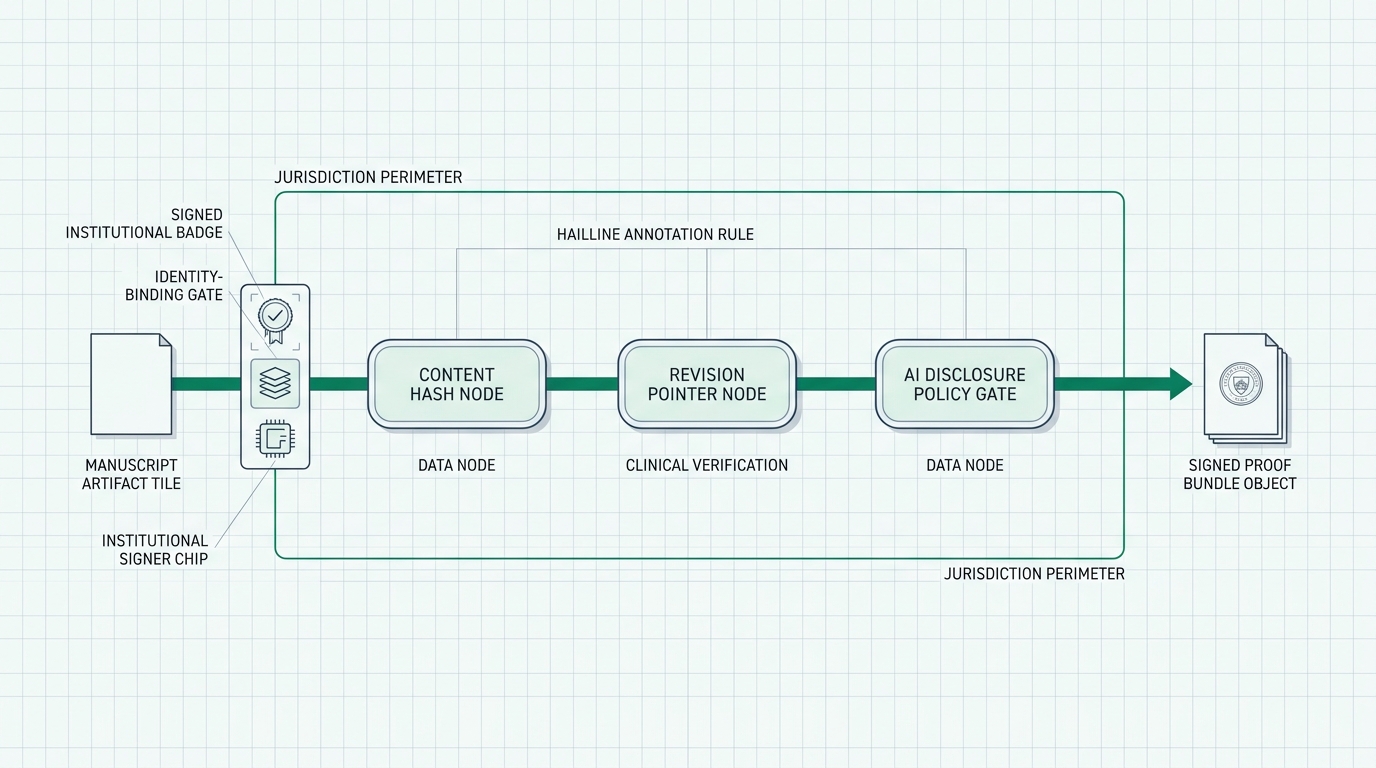
Chain of Custody for Research Integrity: Institutional Proof
Detection tells you that you have a problem. Proof tells you who, what, and when. This is the case for signed, content-addressed custody of the scholarly record — held inside the institution's own trust boundary from ingestion onward.
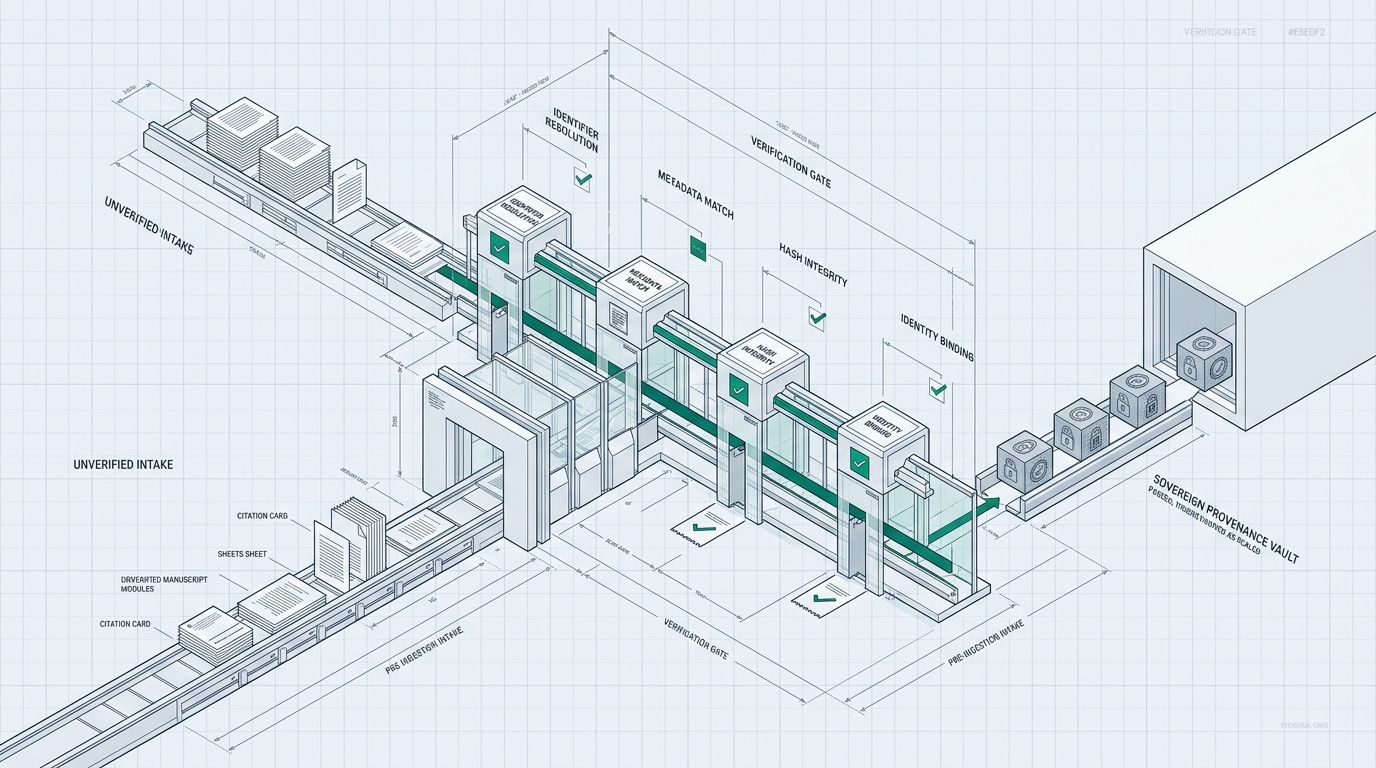
Research Integrity Infrastructure: Pre-Ingestion Checks
Research integrity failures are infrastructure failures. This post outlines pre-ingestion verification, appeal-aware records, and sovereign provenance for academic institutions.
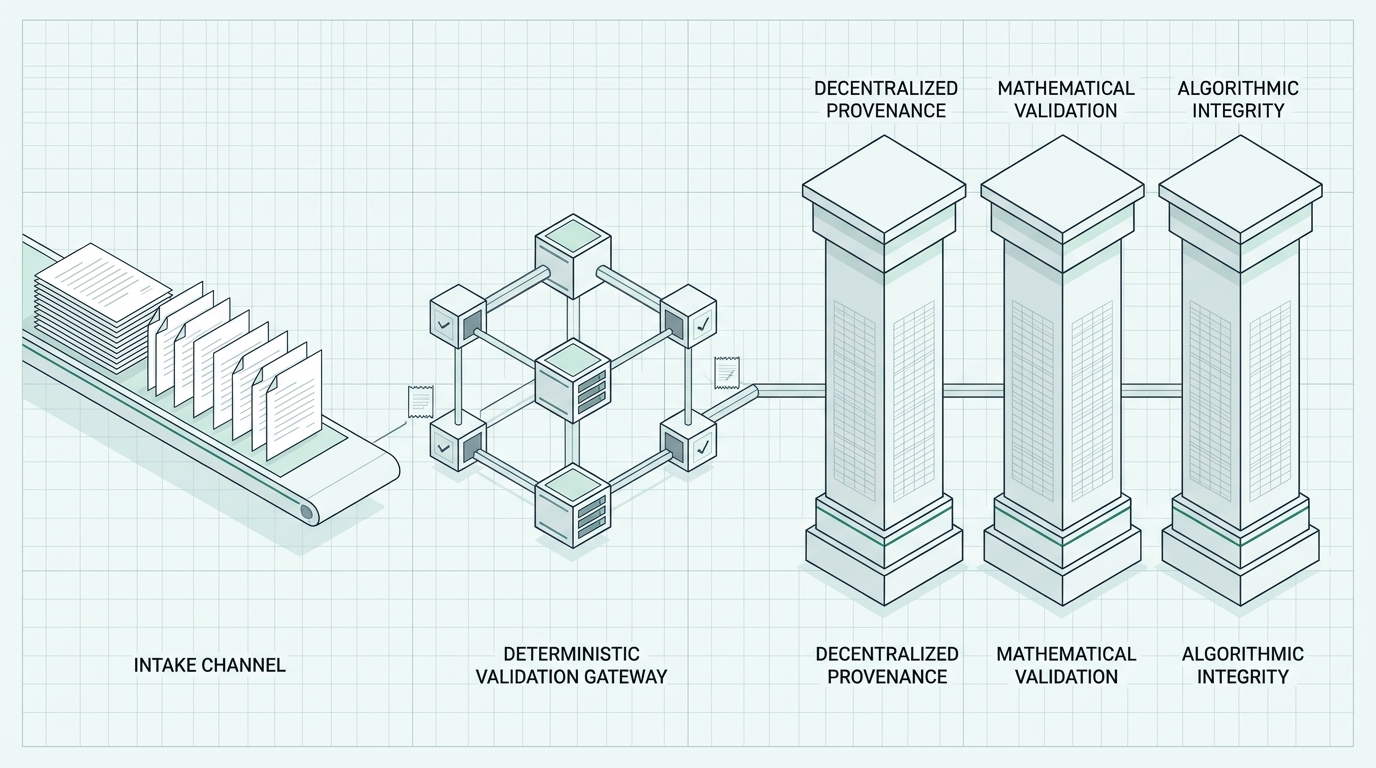
Research Integrity Infrastructure: Verify Before Publication
Scholarly integrity does not fail on ethics — it fails at intake. A structural look at pre-publication attestation, deterministic citation validation, and persistent provenance, and what a scoped institutional pilot actually returns.