July 8, 2026
Decentralized Provenance for Research Integrity – DecentraSec
A deep dive into the PNAS 2025 Su/Trueblood paper: how decentralized provenance using directed acyclic graphs and mathematical validation ensures algorithmic integrity in academic infrastructure.

Beyond Blockchain: How Mathematical Validation Powers Decentralized Research Provenance
The scientific community faces a reproducibility crisis. Too often, published results cannot be traced back to raw data, intermediate steps, or even the exact version of analysis code. While blockchain-based solutions have been proposed, they introduce overhead, energy concerns, and a jargon barrier that alienates many researchers. A recent paper by Su and Trueblood in PNAS (2025) offers a radically different approach – one that relies on mathematical validation rather than distributed ledger consensus.
At DecentraSec, we have been analyzing this paper through the lens of our ScholarMark infrastructure. What follows is a technical breakdown of how decentralized provenance can be achieved without a single token, smart contract, or proof-of-work.
The Core Idea: Directed Acyclic Graphs for Scientific Lineage
Provenance in research is fundamentally about dependency tracking. Each experiment, computation, or citation creates a relationship: the output depends on inputs, parameters, and previous work. A Directed Acyclic Graph (DAG) perfectly models this. Su and Trueblood propose a DAG-based framework where each node represents a research artifact (dataset, code, figure, manuscript) and each directed edge encodes a provenance relationship (e.g., “was derived from,” “was used to produce”).
Critically, the DAG is not stored on a global ledger. Instead, it is locally maintained by each research group and periodically anchored to a public timestamp service (like arXiv DOI registration). This design eliminates the need for consensus mechanisms while preserving tamper-evidence.
Mathematical Validation – The Algorithmic Backbone
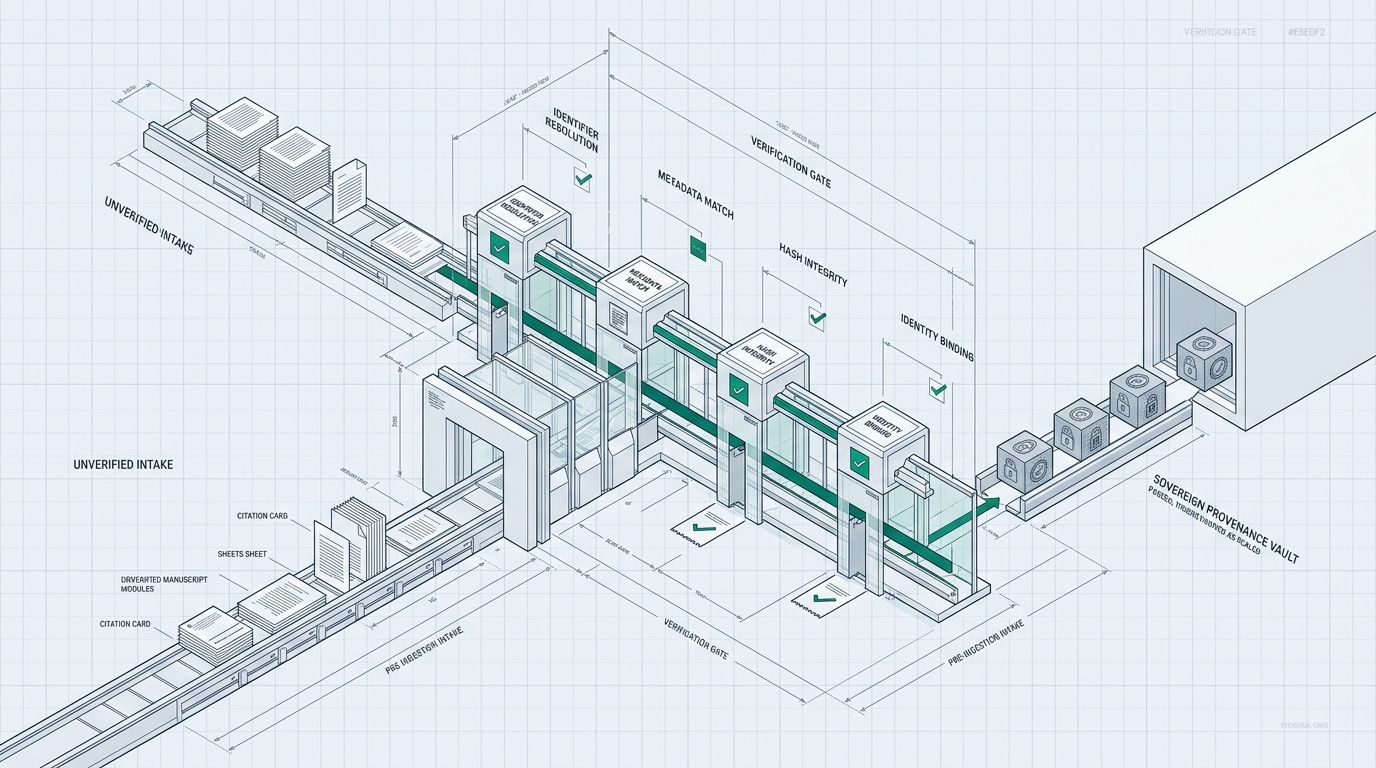
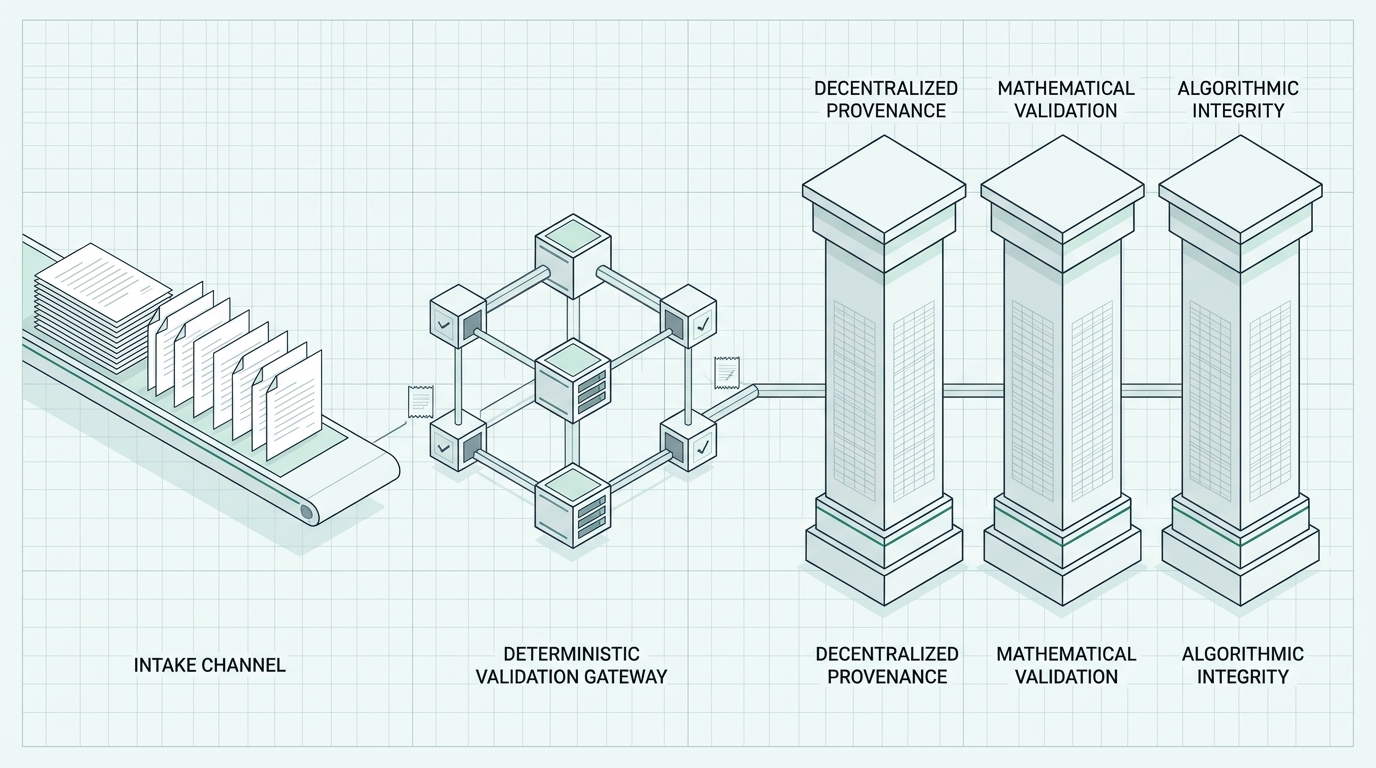
The key innovation is the use of structured cryptographic hashes to create a single “root hash” for the entire DAG, updated incrementally. The paper defines a mathematical validation algorithm that:
- Computes a unique hash for each artifact based on its content and metadata.
- Aggregates child hashes into parent artifacts using a Merkle-tree-like structure, but tailored for DAGs (allowing multiple parents).
- Produces a global summary hash that can be recomputed by any verifier with access to the DAG and the public timestamp.
The algorithm is designed to be incremental – adding a new artifact updates only the affected branch of the DAG, not the entire graph. This makes it feasible for large, ongoing research projects.
Algorithmic Integrity – Avoiding PhD-Level Hand-Waves
One common weakness in academic proposals is the reliance on “publish-subscribe patterns” or “trusted execution environments” without formal proof. Su and Trueblood avoid this by providing:
- A formal definition of integrity for a research DAG: no artifact can be forged or removed without changing the root hash.
- A collision-resistance proof using standard assumptions (SHA-256, Merkle-Damgård construction).
- A complexity analysis – O(log n) per update for incremental validation, O(n) for full recomputation.
This is not hand-waving. The paper includes explicit pseudocode and a worked example for a small clinical trial dataset. For Deep Tech applications, this level of rigor is mandatory.
Integration with arXiv DOIs
A crucial practical requirement is that provenance must hook into existing scholarly infrastructure. The Su/Trueblood framework does not reinvent the wheel – it absorbs standard arXiv DOIs as immutable anchors.
When a researcher deposits a new version of a pre-print to arXiv, the DOI becomes the leaf node of the provenance DAG. Subsequent analyses cite that DOI directly. The validation algorithm checks that the hash of the published PDF matches the content used in the experiment. This creates a cryptographic chain of custody from raw data to published figure to final manuscript.
For DecentraSec’s ScholarMark system, this means we can integrate provenance validation as a lightweight API call – no blockchain node required.
Why This Matters for Global Academic Infrastructure
Decentralized provenance, as defined in this work, is not about eliminating central authorities; it is about distributing trust. Each research group maintains its own DAG, but anyone can verify its integrity using the public timestamp and the published algorithm.
This aligns perfectly with DecentraSec’s mission: to provide tools that protect research integrity without imposing a specific technology stack. ScholarMark will incorporate these mathematical validation principles to offer provenance verification that is:
- Auditable – algorithms are open-source and peer-reviewed.
- Scalable – no global consensus bottleneck.
- Interoperable – works with existing DOI systems, repositories, and preprint servers.
Conclusion
The Su/Trueblood PNAS paper represents a mature, mathematically sound foundation for research provenance. It avoids the hype of cryptocurrency and instead focuses on what the scientific community truly needs: a verifiable, low-overhead way to trace the lineage of results. DecentraSec is committed to implementing this vision within ScholarMark, ensuring that the future of academic infrastructure remains both decentralized and deeply rigorous.
02 // RELATED RESEARCH · ARCHIVE DISPATCHES
Related Papers & Dispatches.
Peer-reviewed analyses, cryptanalysis papers, and zero-trust engineering dispatches.
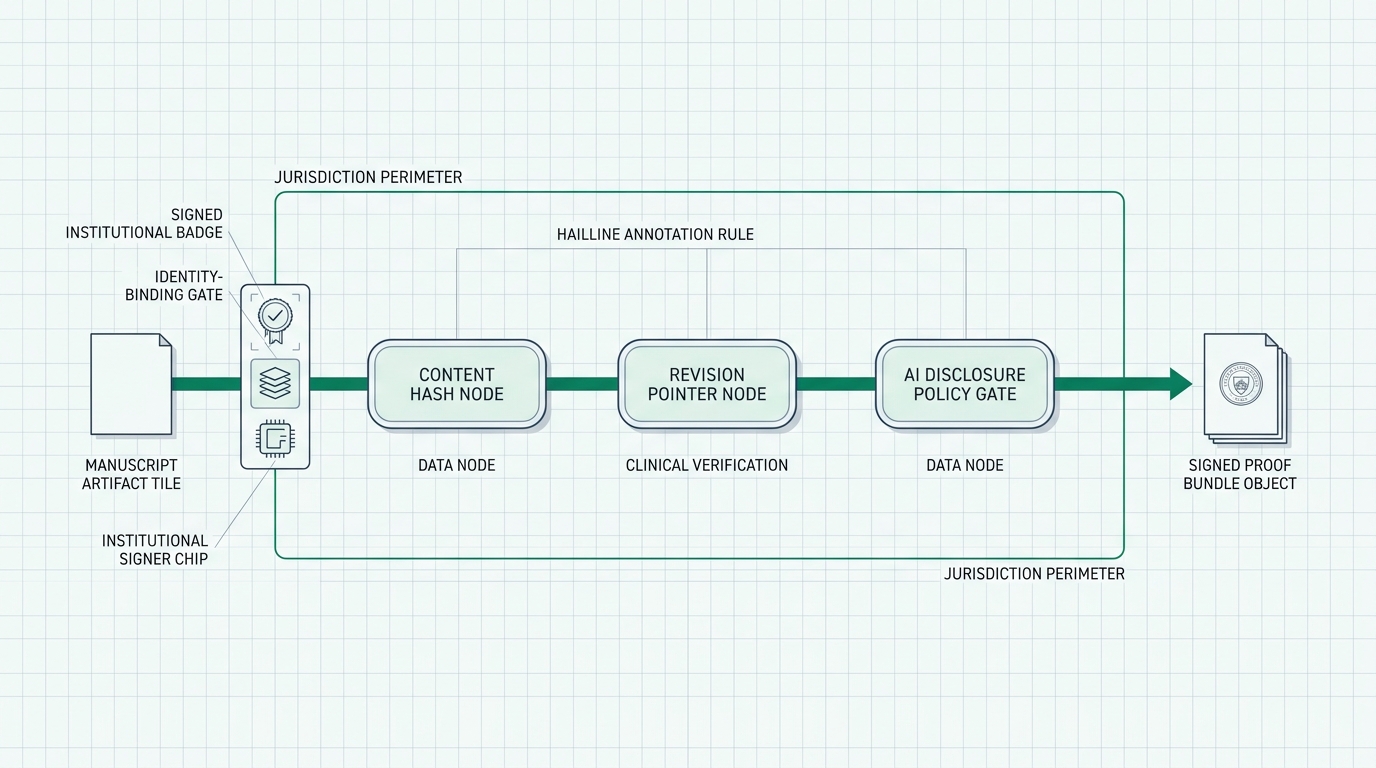
Chain of Custody for Research Integrity: Institutional Proof
Detection tells you that you have a problem. Proof tells you who, what, and when. This is the case for signed, content-addressed custody of the scholarly record — held inside the institution's own trust boundary from ingestion onward.
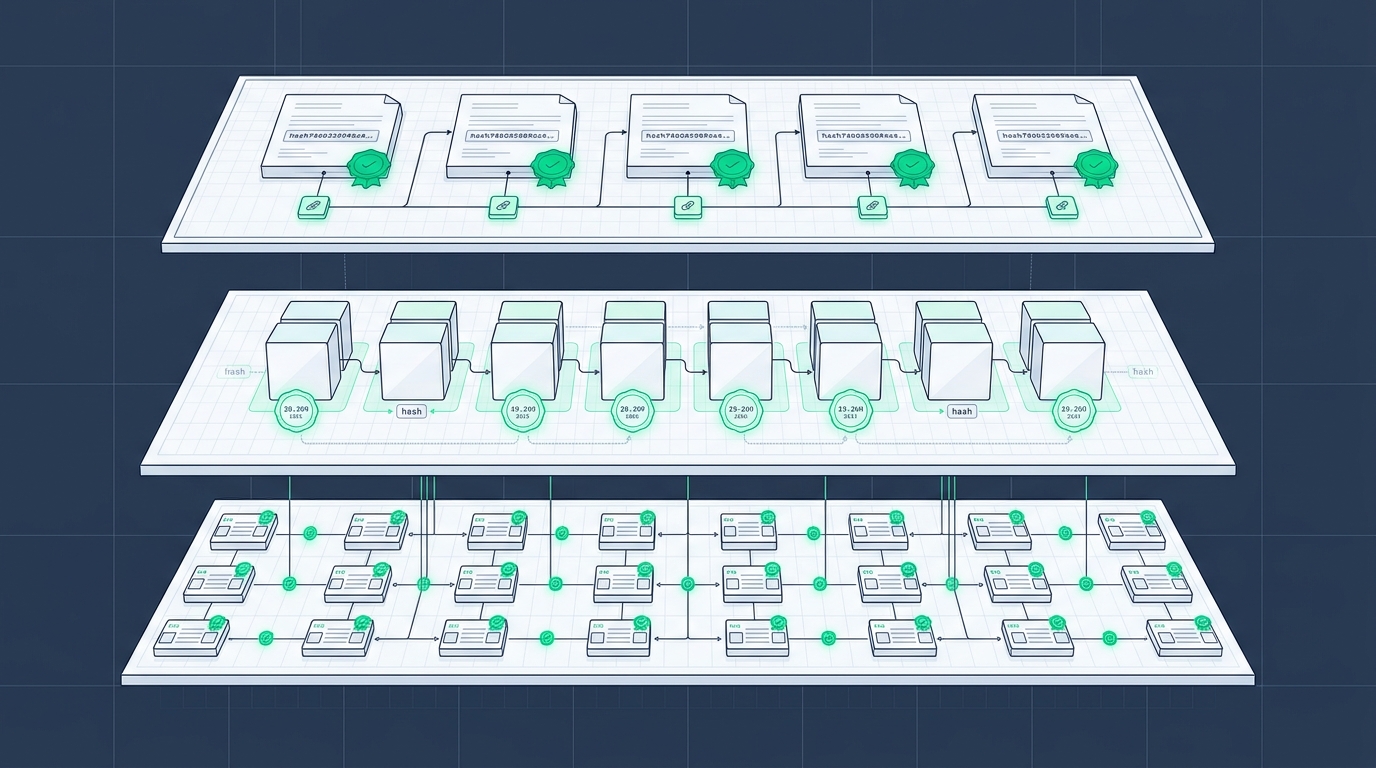
The Verification Gap: Research Integrity Is Infrastructure
Institutions do not lack AI detectors — they lack a verifiable chain of custody. Why the 21% AI-review finding is an audit failure, how tamper-evident provenance makes retraction clusters structurally impossible, and how deans, ORIC directors, and regulators can pilot verifiable research infrastructure this accreditation cycle.
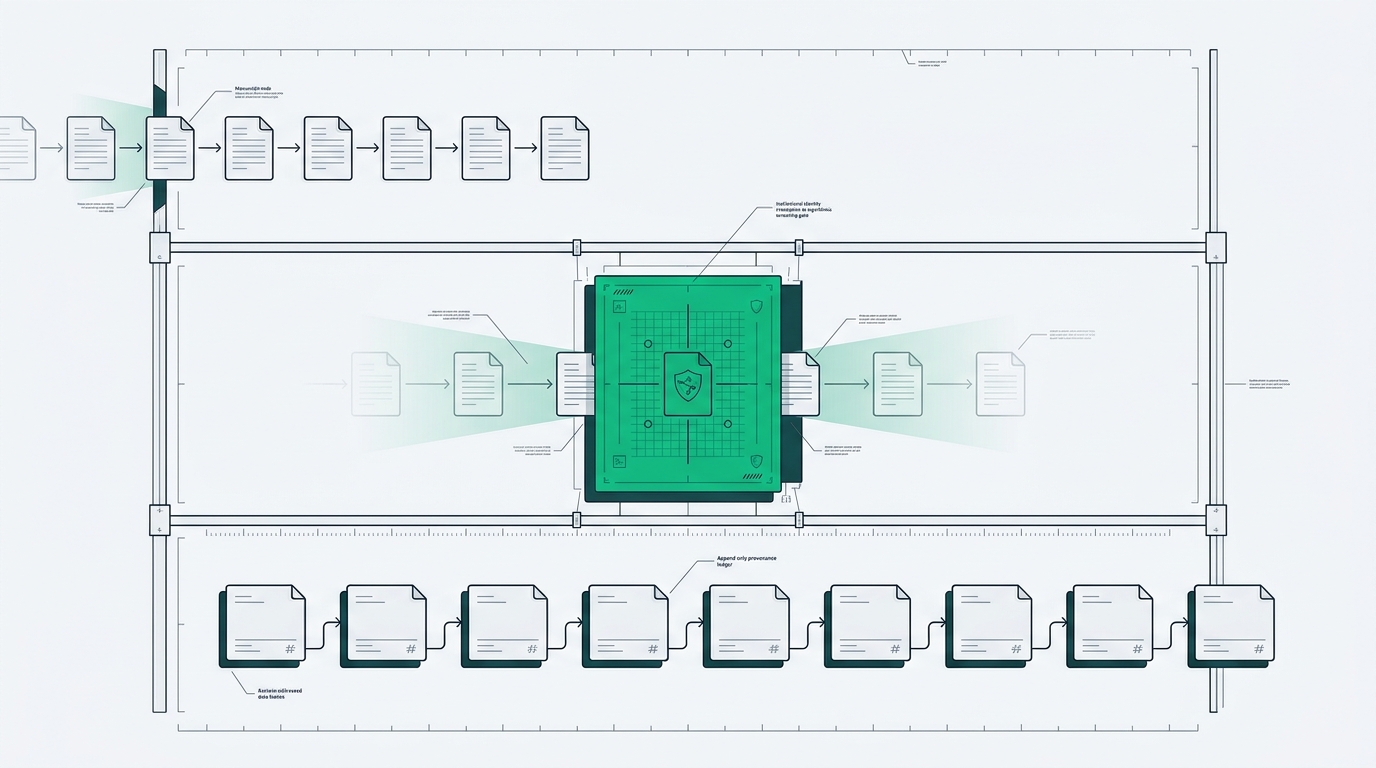
Peer Review Crisis? It's a Research Infrastructure Problem
More than eight million papers now enter a peer review system that can't verify who validated what. The fix is verifiable triage: identity-backed reviewers, screening at ingest, and audit-ready provenance—installed at the institutional layer, not bolted onto editorial software.