July 30, 2026
Verifiable Integrity Infrastructure: Solving Research Fraud & Ransomware
The global research ecosystem needs an infrastructure layer that makes fraud, theft, and sovereignty violations structurally detectable. This post analyzes 7 crises and proposes a verifiable integrity layer.

The global research ecosystem is not failing because of bad actors—it is failing because we built an entire publishing, evaluation, and preservation infrastructure on trust instead of verifiable attestation. The only institutionally viable response is an infrastructure layer that makes fraud, theft, and sovereignty violations structurally detectable rather than dependent on post-hoc vigilance.
In 2025, the academic community watched four simultaneous crises unfold. The Retraction Watch database recorded its highest-ever annual total—over 4,500 papers pulled [1], driven by industrial-scale paper mills and fake peer review rings. The Clop ransomware group exploited a single zero-day vulnerability (CVE-2025-61882, CVSS 9.8) to breach Harvard, Dartmouth, and the University of Pennsylvania, exfiltrating terabytes of pre-publication manuscripts and grant data. The European Commission published a landmark policy paper mandating sovereign data governance for any institution touching EU-funded research [2]. And across the Global South, entire national research ecosystems—Pakistan's Y-category system being the starkest case—lost credibility because their quality frameworks remain gameable at scale.
These are not separate problems. They are symptoms of a single infrastructure deficit: the research ecosystem lacks a verifiable Integrity Infrastructure capable of producing tamper-evident attestations of provenance, identity, and integrity for research artifacts across their entire lifecycle. Infrastructure failures cannot be solved with policy Band-Aids. The data is now undeniable.
The Retraction Tsunami — What the Numbers Actually Tell Us
The problem is not merely the volume of retractions—it is that every detection mechanism remains reactive, post-hoc, and structurally incapable of scaling. Zhou et al. (arXiv:2511.21176, November 2025) conducted a topic-lens analysis of the global retraction landscape and documented over 6,400 retractions attributed to fake peer review and 2,100 tied to AI-generated content [3]. Their analysis found retraction rates varying from 3.25 to 31.97 per 10,000 articles across disciplines—with the upper bound concentrated in electrical engineering and computer science, the highest disciplinary rate ever recorded. Sharma & Khurana (arXiv:2502.00673, February 2025) found that while plagiarism-related retractions grew at an average factor of 1.2× over their study period, fake peer review cases exhibited an average growth factor of 5.5× [4]. The speed of detection reveals how primitive the current integrity layer is: the fraud is so egregious it gets caught immediately, but the pipeline contains no built-in attestation mechanism that would prevent submission in the first place.
Retraction Watch reported in September 2024 that an analysis suggested 1 in 7 scientific papers are partially or entirely fake—a finding the study's author called "wildly non-systematic" but directionally alarming [5]. Even half that rate signals structural contamination that no amount of editorial vigilance can address. The entire submission pipeline operates without cryptographic attestation of integrity. Data, authorship, reviewer identity, and editorial decisions exist in unverifiable silos. Reactive forensics cannot match industrial-scale fraud. What is needed is a cryptographic data lineage system that mathematically proves every artifact's origin and transformation chain—making fake papers structurally impossible to inject undetected.
The AI Author Crisis — When Dead Scholars "Publish" AI Slop
In September 2025, researcher Mark Carrigan documented predatory journals publishing AI-generated papers attributed to deceased scholars—Zygmunt Bauman (d. 2017), Pierre Bourdieu (d. 2002), and Michael Burawoy [6]. These papers passed through "peer review" and appeared in journals indexed in seemingly legitimate databases. Peer review did not catch that the author was deceased.
The submission chain requires no attestation of author identity or content provenance. ORCID IDs, institutional email addresses, and editorial judgment are all trivially circumvented when generative AI produces plausible manuscripts at scale. Every fake paper that passes through contaminates the citation graph. Your researchers cite fraudulent work; grant applications rest on shaky foundations. Without automated, cryptographically verifiable submission-chain attestation—what we term Algorithmic Integrity—that boundary cannot be enforced at scale. ScholarMark's dedicated AI integrity layer provides exactly this: a pre-submission verification gate that checks content provenance, author identity, and reviewer credentials using tamper-evident proofs.
Ransomware as an Infrastructure Problem — Harvard, Dartmouth, and the Zero-Day That Changed Everything
Academic research data is now a Tier 1 ransomware asset. The Clop campaign (2025–2026) exploited CVE-2025-61882, an Oracle E-Business Suite zero-day, breaching over 100 organizations. Academic victims included Harvard University (1.3 TB of research and administrative data leaked), Dartmouth College (44,000+ records including SSNs), University of Pennsylvania, and University of Phoenix (3.5 million individuals affected) [7–10]. Attackers specifically targeted research administration systems—pre-publication manuscripts, peer review correspondence, grant proposals, clinical trial data.
Universities continue to rely on perimeter-based security models. When a zero-day grants access, attackers silently exfiltrate terabytes of irreplaceable intellectual property—and the institution may not detect the breach for months. The infrastructure asymmetry is unsustainable: a single zero-day exploit represents a one-time cost to the attacker, while the downstream cost to an institution—in lost IP, regulatory exposure, and reputational damage—can reach tens of millions of dollars.
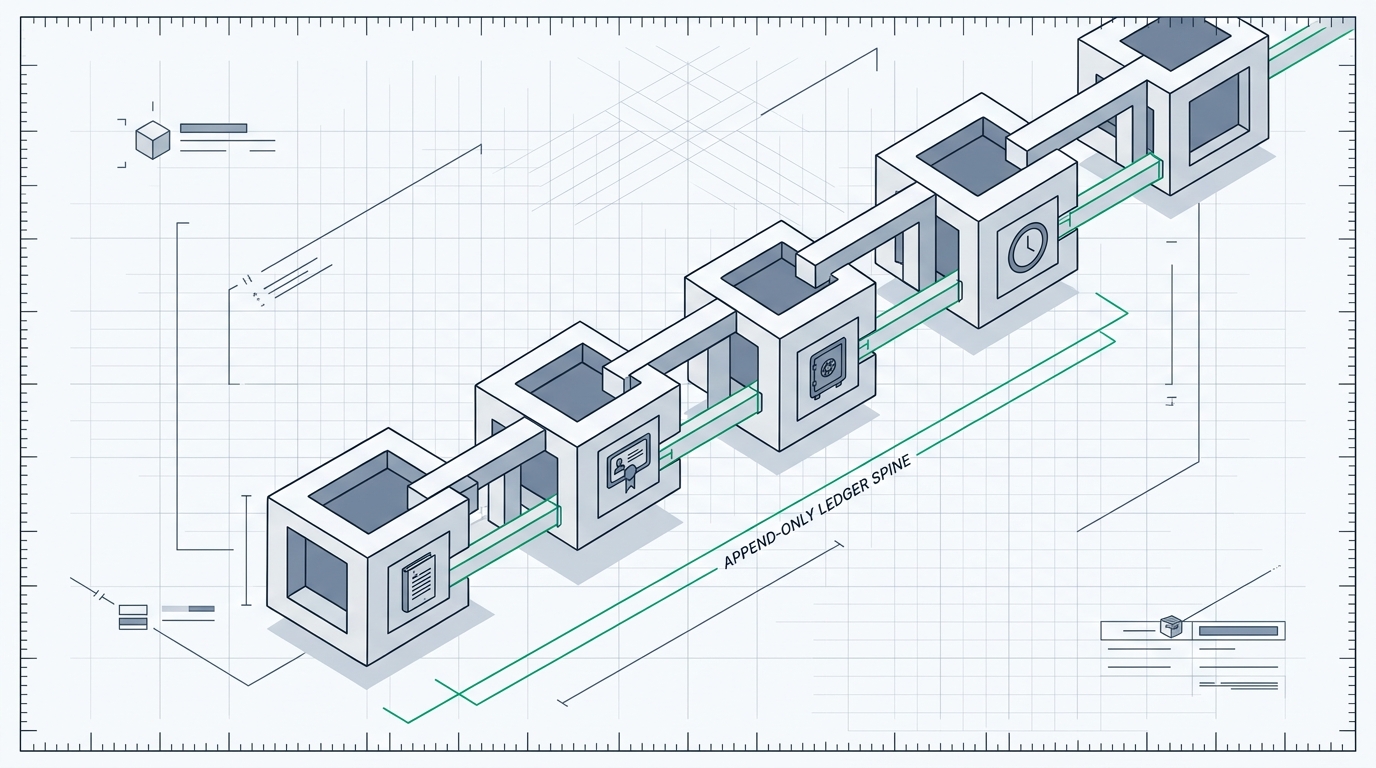
The solution requires a Distributed Integrity Architecture that provides two specific guarantees. First, tamper-evident access logging: every access attempt—authorized or unauthorized—is recorded in an append-only, cryptographically verifiable log distributed across institutional custody boundaries. This means that even if an attacker exploits a zero-day to breach the perimeter, the access event is indelibly recorded, and silent exfiltration is structurally detectable. Second, client-side encryption with institution-retained key custody: research data is encrypted before it reaches shared infrastructure, so even if an attacker exfiltrates the ciphertext, the institution retains sole control over decryption. The data has no ransom value to an adversary who cannot decrypt it. This is the core of the Integritas Vault—a cryptographic storage layer that renders ransomware useless by design.
Data Sovereignty Meets Global Collaboration — The EU's Infrastructure Mandate
The European Commission's December 2025 EOSC Steering Board opinion paper positions data sovereignty as a core operational requirement [2]. Institutions must demonstrate verifiable control over where data resides, who accesses it, and under which jurisdictional framework—without fragmenting global research collaboration. Traditional centralized cloud infrastructure creates an unresolvable trade-off between data sovereignty and global collaboration. Data residency requirements enforced through regional data centers produce silos, increase costs, and cannot provide mathematical proof of compliance—only contractual assurances.
This infrastructure deficit mirrors effects in emerging research ecosystems. Pakistan's HEC Y-category system (documented in an April 2026 open letter) created perverse incentives: papers "processed and published in as little as 48 to 72 hours," peer review as "an open secret," fraudulent clone journals [11]. India's Anna University saw 161 affiliated-college papers retracted in 2025 alone [12]. Centralized classification remains inherently gameable because it concentrates authority in a single trust point. A distributed provenance and reputation layer—where institutional and researcher identity is attested through cryptographic proofs verifiable by any party, and where reputation accrues from transparent, auditable contributions—is the only structurally sound alternative. Multi-jurisdictional compliance must be embedded at the protocol level, enabling institutions to participate in global collaboration while maintaining mathematically provable data sovereignty.
The Infrastructure Solution — From Vigilance to Verification
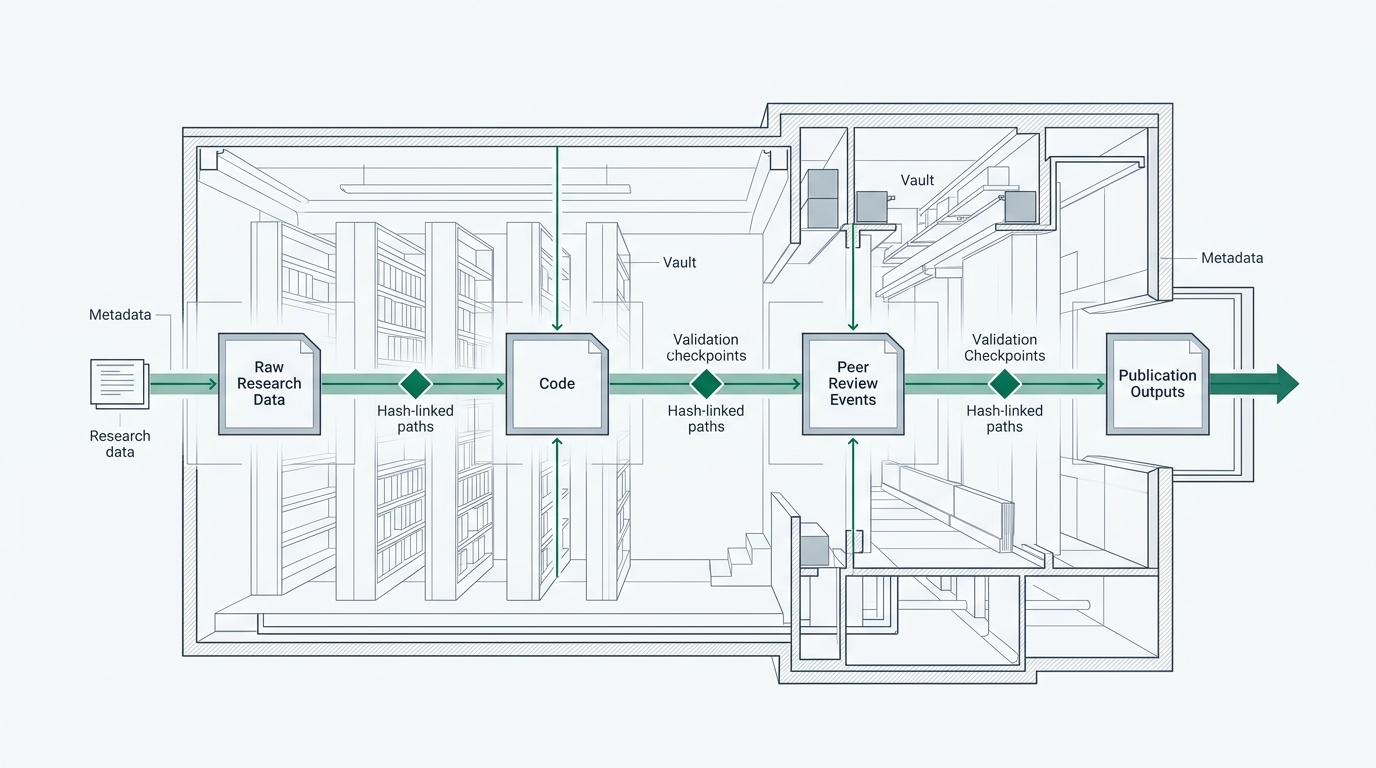
The seven crises documented above trace back to a common deficit: the absence of a Verifiable Integrity Layer across the research lifecycle. By "verifiable integrity," we mean infrastructure that produces cryptographic attestations—tamper-evident proofs—at each transition point in a research artifact's lifecycle: submission, review, revision, publication, citation, and preservation. These attestations are structured so that any party can independently verify them without trusting the attesting party. This is not blockchain; it is applied cryptography deployed at the infrastructure layer.
Trust-based systems—editorial gatekeeping, institutional policy, post-publication vigilance, perimeter security—have reached their scaling limit. Paper mills operate at industrial scale. Ransomware gangs operate at industrial scale. Policy cannot outpace fraud when the infrastructure was designed for a pre-digital, pre-AI era.
Infrastructure-grade Integrity Infrastructure means: cryptographic attestation replaces probabilistic trust; tamper-evident provenance replaces reactive forensics; distributed custody with no single-party trust dependency—what we call Decentralized Provenance—replaces gameable centralized classification; and cryptographic sovereignty replaces perimeter-based security. Each crisis operates on a different surface, but they share the same vulnerability: the absence of verifiable integrity at the infrastructure layer. Addressing that common deficit does not magically solve all problems—but it eliminates the structural conditions that make all seven crises possible at their current scale.
Closing: The Institutional Pilot Grant
The era of solving infrastructure problems with policy patches is over. The institutions that lead in the next decade will recognize integrity as an infrastructure investment—not a compliance checkbox.
DecentraSec is now accepting applications for the Institutional Pilot Grant program. Selected institutions receive:
- A fully configured ScholarMark deployment across a defined research unit or department
- Dedicated implementation engineering and integration support
- Priority access to the GEAR Network governance layer for multi-institutional collaboration
- Co-authorship on a joint case study documenting infrastructure-level integrity outcomes
Pilot Grant recipients benefit from a substantially reduced implementation cost structure—structured as an Early Adopter Subsidy for the first 12 months—with no long-term lock-in. This is an infrastructure partnership designed to generate the institutional evidence base that the entire research ecosystem needs.
[Apply for the Institutional Pilot Grant →]
References
- phdtalks.org (January 2026). 4,500+ Research Papers Were Retracted in 2025. Data compiled from RetractionDatabase.org; reports 4,544 total retractions. The Retraction Watch Database figure for the same period requires direct confirmation.
- European Commission, EOSC Steering Board Expert Group (E03756) (December 2025). Strengthening European sovereignty in data for research. Opinion paper. Available at: research-and-innovation.ec.europa.eu.
- Zhou, Z., Lou, Y., Shen, Z., & Li, M. (2025). Prevalence and Trends in Global Retractions Explored Through a Topic Lens. arXiv:2511.21176. Documents over 6,400 retractions attributed to fake peer review and 2,100 to AI-generated content; reports disciplinary retraction rates ranging from 3.25 to 31.97 per 10,000 articles.
- Sharma, K. & Khurana, P. (2025). Retracted Citations and Self-citations in Retracted Publications: A Comparative Study of Plagiarism and Fake Peer Review. arXiv:2502.00673. Reports average growth factor of 5.5× for fake peer review cases vs. 1.2× for plagiarism over the study period.
- Retraction Watch (24 September 2024). 1 in 7 scientific papers is fake, suggests study that author calls 'wildly non-systematic'. Analysis by Heathers, J. on Open Science Framework.
- Carrigan, M. (26 September 2025). Predatory journals publishing AI slop in the name of famous academics to confer legitimacy. markcarrigan.net.
- Security Affairs (October 2025). Harvard University hit in Oracle EBS cyberattack, 1.3 TB of data leaked.
- The Dartmouth (January 2026). More than 40,000 hit by Dartmouth data breach.
- State of Surveillance (2025–2026). Clop ransomware campaign targeting academic institutions via Oracle EBS zero-day CVE-2025-61882.
- BleepingComputer (December 2025). University of Phoenix data breach impacts nearly 3.5 million individuals.
- The Friday Times (April 2026). Open letter to HEC Chairman on the Y-category system.
- Times of India (20 February 2026). 161 research articles published by engineering colleges affiliated to Anna University in Tamil Nadu retracted in 2025.
02 // RELATED RESEARCH · ARCHIVE DISPATCHES
Related Papers & Dispatches.
Peer-reviewed analyses, cryptanalysis papers, and zero-trust engineering dispatches.
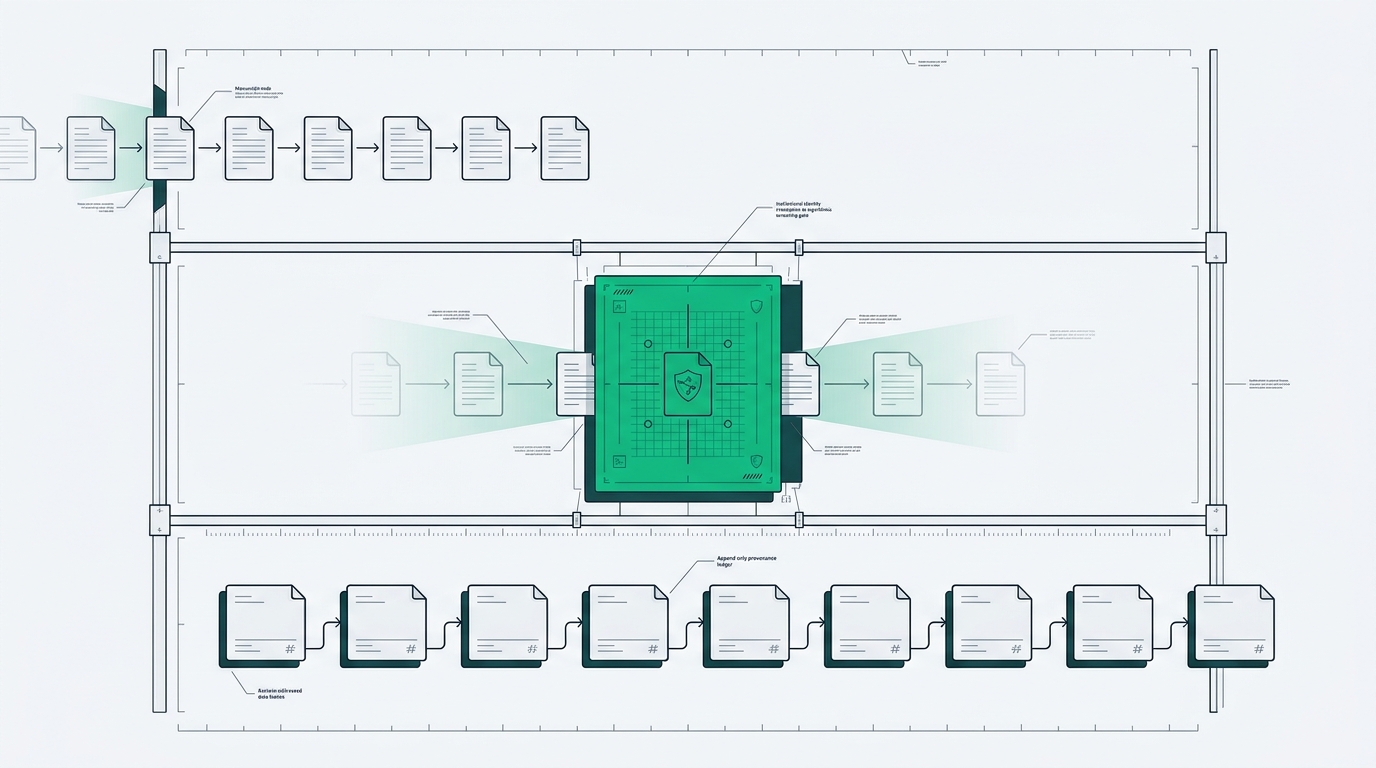
Peer Review Crisis? It's a Research Infrastructure Problem
More than eight million papers now enter a peer review system that can't verify who validated what. The fix is verifiable triage: identity-backed reviewers, screening at ingest, and audit-ready provenance—installed at the institutional layer, not bolted onto editorial software.
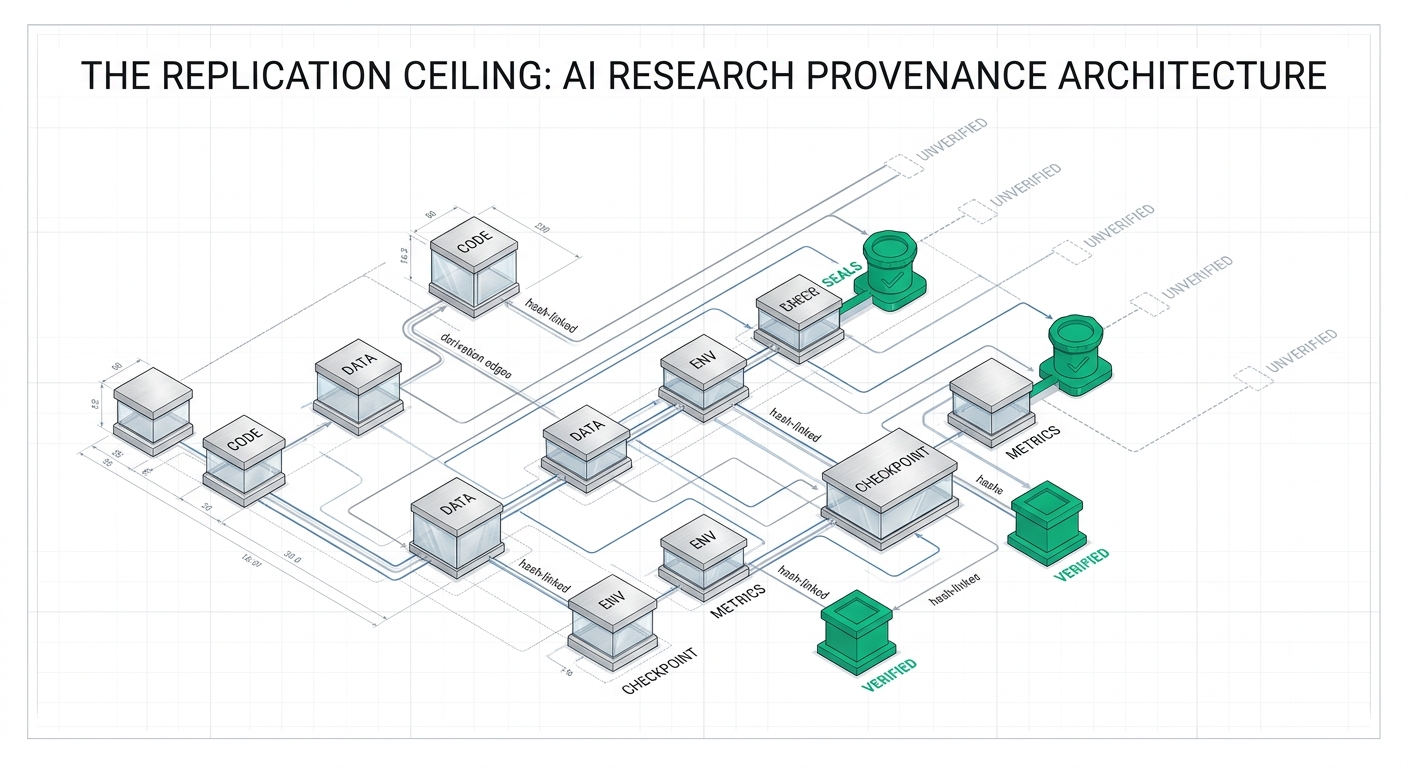
AI Reproducibility Ceiling: 21% Derived, 79% Not Verified
The strongest tested agent re-derived only 21% of tasks from top-venue AI papers. The institutional remedy is verifiable provenance infrastructure—not another checklist.
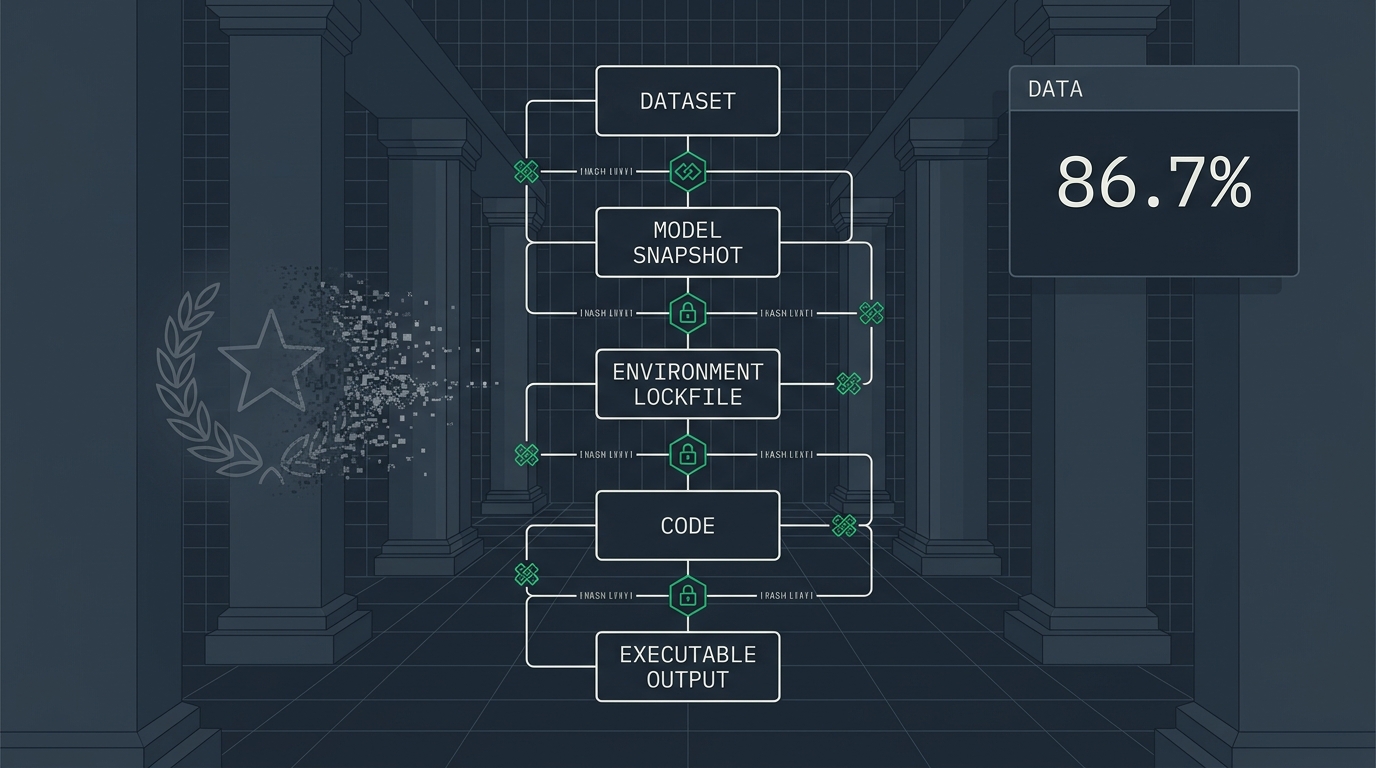
LLM4SE Reproducibility Crisis: 86.7% of Papers Fail Audit
First 640-paper audit of LLM4SE research finds 86.7% reproducibility failure modes. ScholarMark replaces badges with tamper-evident, mathematically verifiable infrastructure — proof, not presence.