August 25, 2026
Research Integrity as Auditable Infrastructure | DecentraSec
The scientific record is the last unmanaged supply chain. Here is how research integrity becomes auditable infrastructure — and why early-adopting institutions will set the standard before funders enforce it.
The Scientific Record Is an Unmanaged Supply Chain: Research Integrity as Auditable Infrastructure
By DecentraSec Team
Research integrity now functions as Integrity Infrastructure — a compliance-grade input to enterprise R&D, licensing, and regulatory decisions. Institutions that treat validation as a reputational assumption rather than a cryptographically verifiable asset absorb the fraud, replication, and data-sovereignty liability that funders and regulators increasingly mandate against.
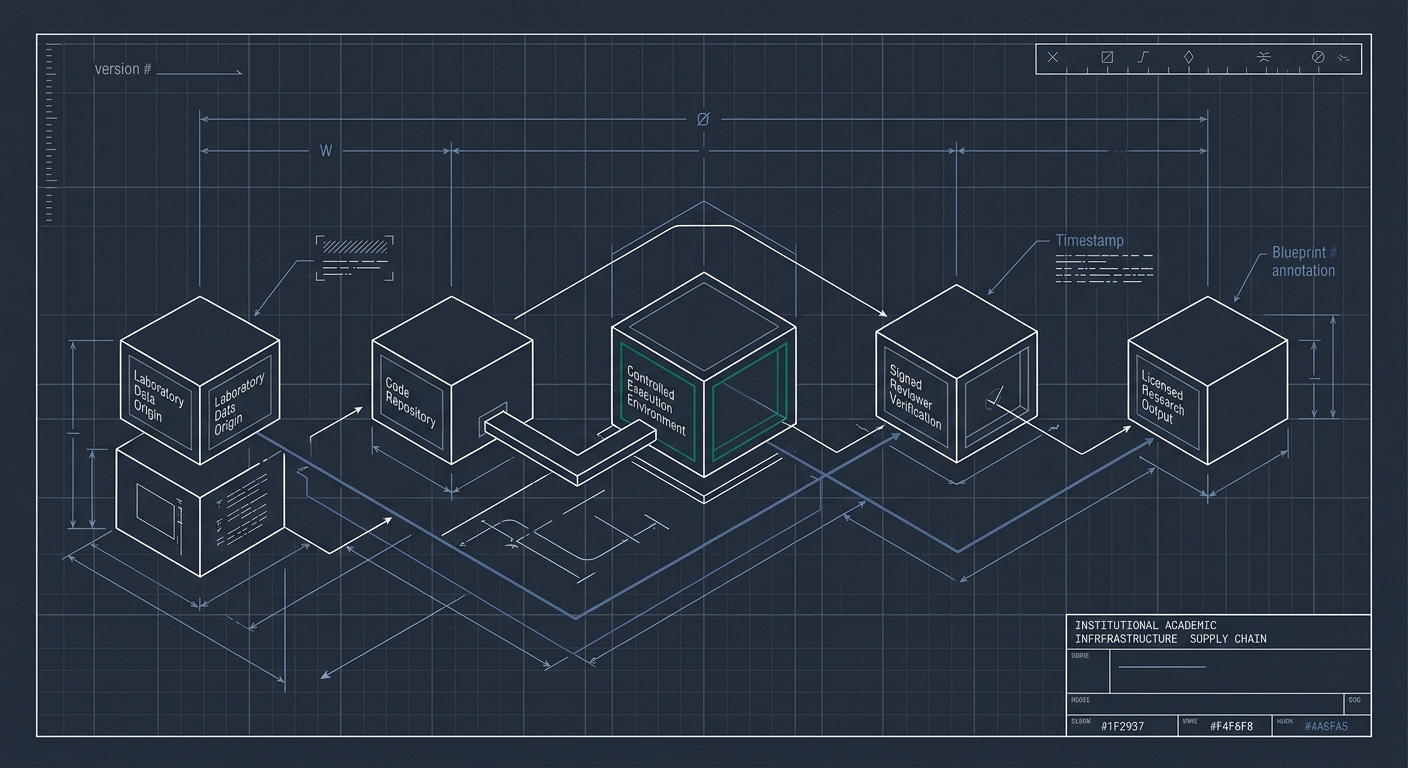
When a pharmaceutical company licenses a published result, it procures an unverified asset. No bill of lading accompanies the finding: no machine-readable record of which code, which data, which execution environment, and which identified human produced it. Provenance, in this context, means a machine-readable, cryptographically bound record of origin, transformation, and authorization — not a metadata tag or a database entry. The scientific record is among the last global supply chains without routine provenance tracking, and the one whose failures propagate into unsafe products, defective licensing decisions, and regulatory exposure.
The scale of the break is quantified. In 2025, a PNAS analysis (DOI:10.1073/pnas.2420092122) identified more than 32,700 suspected paper-mill papers in real, indexed journals. One operation alone manufactured 26 fabricated author–reviewer personas, half of whom became actual peer reviewers (10th Peer Review Congress, Sept 2025). Industry replication audits — most prominently Bayer's internal survey (Prinz et al., Nat Rev Drug Discov, 2011; DOI:10.1038/nrd3439-c1) — find published data aligned with in-house findings in only 20–25% of projects. For Deans, ORIC Directors, and Tier-1 Principal Investigators, this is a risk class, not an ethics footnote. The question shifts from researcher honesty to provable output integrity — on demand, to funders, licensees, and regulators.
Five Integrity Failure Points, One Systemic Break
The failure is structural; five fronts collapse simultaneously.
The reviewer pool is collapsing. Nature (Aug 2025; DOI:10.1038/d41586-025-02457-2) documents editors reporting dozens of invitations to secure two reviewers. For a Dean or ORIC, this degrades the flagship outputs industry licensees rely on.
Replication cannot be demonstrated on demand. The White House MAHA report and subsequent NIH policy signals place research replication on the federal agenda — a shift from encouragement toward mandate. Institutions without provenance infrastructure cannot answer an auditor's question; they can only cite reputation.
Paper mills have industrialized fraud. The 32,700-paper database and 26-persona operation show a manufacturing scale that AI compounds: fabrication grows cheaper, detection harder.
Paid review creates speed-without-accountability risk. Biology Open's Fast & Fair pilot cut mean first decision from 37.7 to 5.5 working days at £220 per review. The model is defensible only if each paid decision binds to a verified, signed reviewer event. Speed without provenance is faster risk.
Genomic data sovereignty is unresolved. African genomics leaders continue to warn that genetic data extracted for AI training without benefit-sharing turns consent into a traveling policy. Institutions holding genomic data without cryptographically bound, machine-enforceable consent provenance carry liability into every derivative dataset.
Why Post-Publication Patching Cannot Restore Research Integrity
The current paradigm asserts integrity after publication — retractions, corrections, reputation scoring. That is reactive bookkeeping, not validation. A system that records publication and retraction events cannot answer three operational questions: which code, data, and execution environment produced this result; which verified human, under what identity and workload, approved it; and which consent terms travel with this dataset and its derivatives. Retraction rates cannot outpace a 32,700-paper backlog; volunteer goodwill cannot outlast paid-review assembly lines. Neither guarantees Algorithmic Integrity — the property that every lifecycle step has a verifiable transition: inputs are committed, actors are authenticated, transformations are signed, and policies are enforced. Algorithmic Integrity is not a synonym for good science; it is the evidence layer that makes good science auditable.
The engineering precedent exists. In e-science, Missier et al. (arXiv:1406.0905; DOI:10.1002/cpe.3035) formalize reproducibility as workflow-provenance comparison: two executions are reproducible when their input, process, and output provenance align under defined differencing rules. Hasham et al. (arXiv:1511.09061; DOI:10.5220/0005452800490059) extend that trace to cloud infrastructure, making the execution environment part of the provenance and re-provisioning it for re-execution. Wang et al. (arXiv:1910.00742) demonstrate hierarchical storage for verifiable services at industrial-IoT scale. Jaberzadeh et al. (arXiv:2307.10492; DOI:10.1007/978-3-031-45155-3_19) demonstrate, in a federated-learning setting, that distributed protocols can penalize dishonest contribution through incentive mechanisms. None of these papers solves research integrity alone; together they supply the reusable primitives: provenance differencing, infrastructure-aware re-execution, verifiable storage, and accountability mechanisms.
The Infrastructure Alternative: Mathematical Validation and Decentralized Provenance
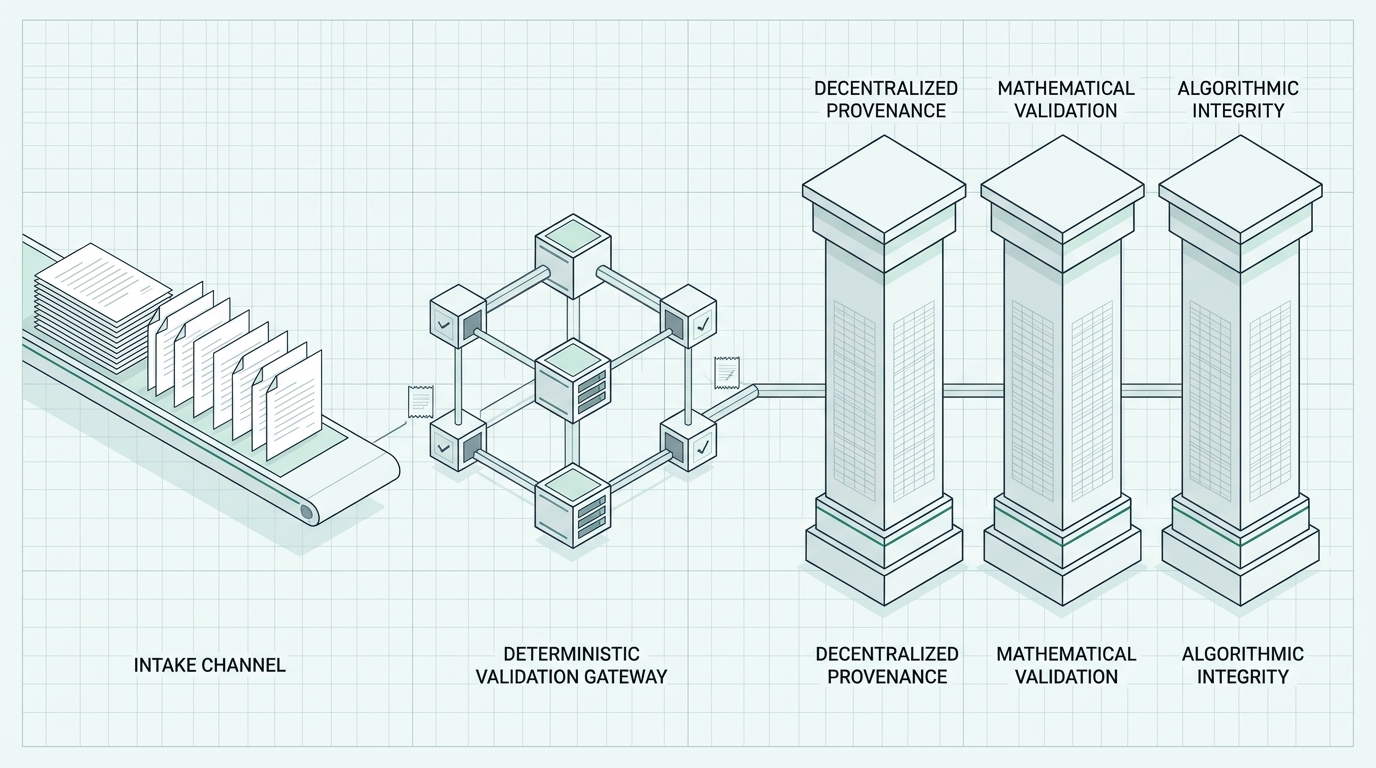
Mathematical validation is the verification of three structural properties. Completeness: every declared input, transformation, and output is present in a machine-readable lineage graph. Tamper-evidence: any post-hoc change to code, data, environment, or approval invalidates a cryptographic hash commitment or digital signature. Accountability: each action binds to an identified actor through an authenticated signature and a signed timestamp.
Mathematical validation does not prove a result is scientifically true; it proves the result is exactly what the recorded inputs, transformations, and approvals produced, and that no step has been silently altered. That distinction is the point: truth remains a scientific question; integrity is an engineering property.
Verification must become recomposition, not reputation. Bind every artifact to an algorithmic lineage graph — code, data, execution environment, and the identified human(s) who produced and verified it — tamper-evident and time-stamped. Convert every review event into a signed, time-stamped assertion; reviewer identity, assigned workload, and decision record become auditable artifacts, with quality assessed against explicit rubrics. Enforce consent as a traveling policy: genomic and human-derived data carry machine-readable consent terms across every derivative use, and each use request must present proof that the governing terms permit the operation, enforced inside jurisdictionally controlled data enclaves. Verification becomes recomputation where inputs are accessible — a licensing officer re-executes the recorded workflow against the provenance graph. Where data cannot leave a controlled enclave, verification becomes an integrity and policy audit: cryptographic commitments and signed approvals are checked without exposing raw assets.
Decentralized Provenance is not a token and not a consensus mechanism deployed for its own sake. It means the evidence graph is replicated across independent verifiers and anchored by signed timestamps, so no single archive operator can unilaterally rewrite history. Decentralization is the property that audit evidence survives any single institution's custody failure.
This is the institutional payoff: a licensee can verify before contracting, a regulator can inspect before approval, and a funder can audit before renewal. The asset is no longer the paper; it is the evidence chain.
Scale evidence exists. Donovan Meyer et al. (arXiv:2204.05390; DOI:10.3847/25c2cfeb.4ece85d4) document structured reviewer assignment at ALMA telescope scale — over 1,000 reviewers processing 1,497 proposals. That does not prove every review was high quality; it demonstrates that assignment, load, and completion can be instrumented at scale. Reviewer management is an engineering problem, not a goodwill problem.
For institutional leadership, Decentralized Provenance is a differentiating asset. Institutions that produce it win funder mandates, industry partnerships, and regulatory trust. Institutions that cannot carry the liability.
The Institutional Playbook for Research Integrity Infrastructure
Deans — position integrity as a competitive lever, not a compliance cost. Publish a research-integrity infrastructure roadmap; deploy provenance capability in faculty recruitment, publishing strategy, and funding narratives.
ORIC Directors — insert validation into the commercialization pipeline. Every licensing, partnership, and tech-transfer deal should carry a provenance audit as standard diligence.
Tier-1 Researchers — future-proof the publication record. Pilot provenance-attested workflows on flagship papers; meet funder mandates before enforcement; convert reproducible output into a grant advantage.
Sequence the rollout pragmatically: start with one high-stakes pilot group — genomics, clinical AI, or pharma-adjacent chemistry — establish outcome metrics, then institutionalize.
The 2025 convergence — Nature's peer-review warning, the White House replication policy shift, the 32,700-paper database, the Peer Review Congress findings, paid-review expansion, and the African data-sovereignty reports — means integrity is now engineered into the pipeline. Early adopters set the standard; late adopters inherit the audit.
The Ask: Fund Integrity Infrastructure, Don't Buy a Feature
This is an institutional infrastructure decision, not a software purchase — the same class as a core-facility investment. ScholarMark invites a small cohort of institutions to co-fund a 90-day Institutional Pilot Grant: an outcome-scoped deployment across one pilot faculty or group, with defined success metrics — provenance-attested publications, reviewer identity verification rates, replication audit pass-rates. The Early Adopter Subsidy provides limited-term deployment support for the first institutions that integrate Integrity Infrastructure ahead of funder mandates. This is a first-mover position, not a discount.
The integrity of your institution's research output is now a measurable, auditable asset. Build the infrastructure now and set the standard — or inherit the audit later.
References
- Nature (Aug 2025). "The peer-review crisis: how to fix an overloaded system." 644:24–27. DOI:10.1038/d41586-025-02457-2
- PNAS (Aug 2025). "The entities enabling scientific fraud at scale are large, resilient, and growing rapidly." DOI:10.1073/pnas.2420092122
- 10th Peer Review Congress (Sept 2025). Paper-mill fake-persona study: 26 fabricated identities.
- Biology Open / The Company of Biologists. Fast & Fair peer review pilot: first decision 37.7→5.5 working days at £220/review.
- Prinz, F., Schlange, T., Asadullah, K. (2011). "Believe it or not: how much can we rely on published data on potential drug targets?" Nat Rev Drug Discov 10:712. DOI:10.1038/nrd3439-c1
- White House MAHA Commission report and NIH policy signals. Replication on the federal research agenda.
- Missier, P. et al. arXiv:1406.0905. DOI:10.1002/cpe.3035
- Hasham, K. et al. arXiv:1511.09061. DOI:10.5220/0005452800490059
- Jaberzadeh, A. et al. arXiv:2307.10492. DOI:10.1007/978-3-031-45155-3_19
- Wang, S. et al. arXiv:1910.00742.
- Donovan Meyer, J. et al. arXiv:2204.05390. DOI:10.3847/25c2cfeb.4ece85d4
- African genomics data-sovereignty reporting.
02 // RELATED RESEARCH · ARCHIVE DISPATCHES
Related Papers & Dispatches.
Peer-reviewed analyses, cryptanalysis papers, and zero-trust engineering dispatches.
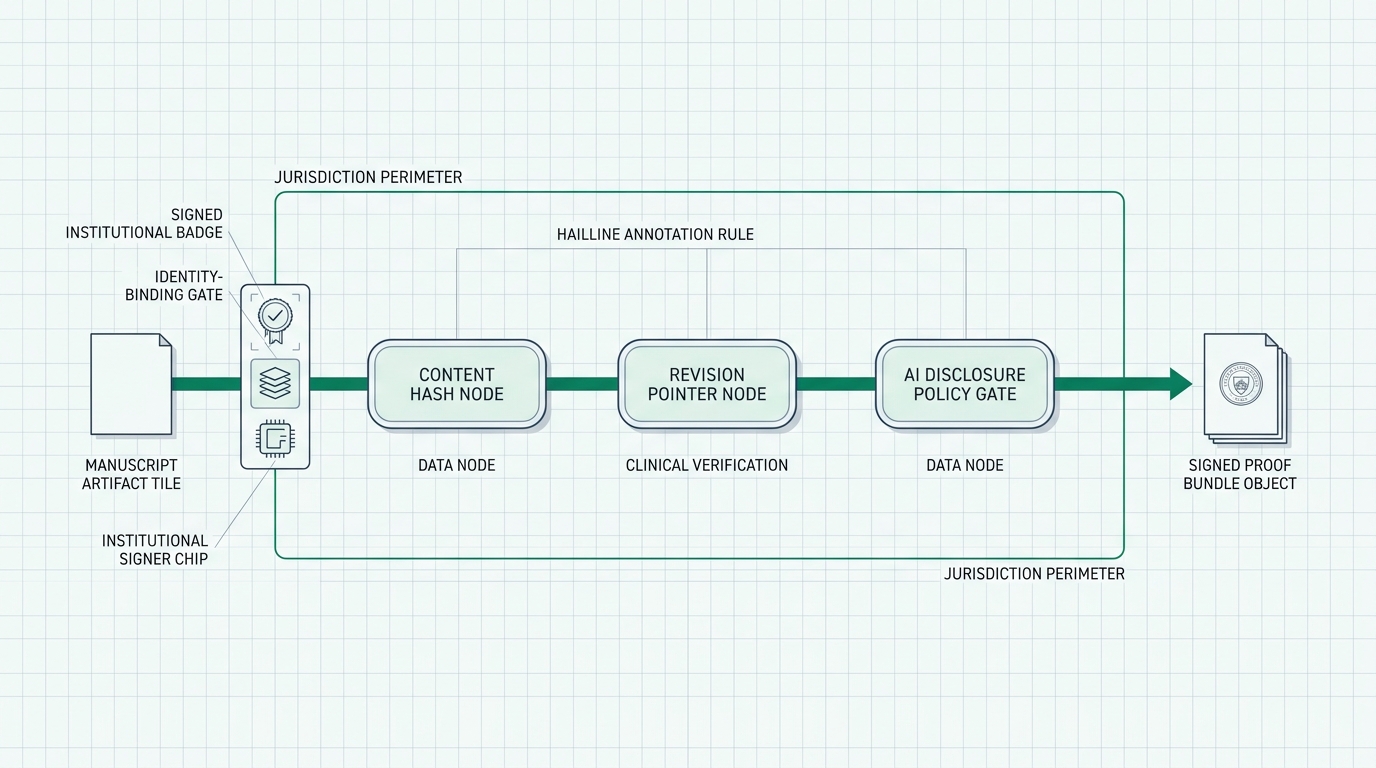
Chain of Custody for Research Integrity: Institutional Proof
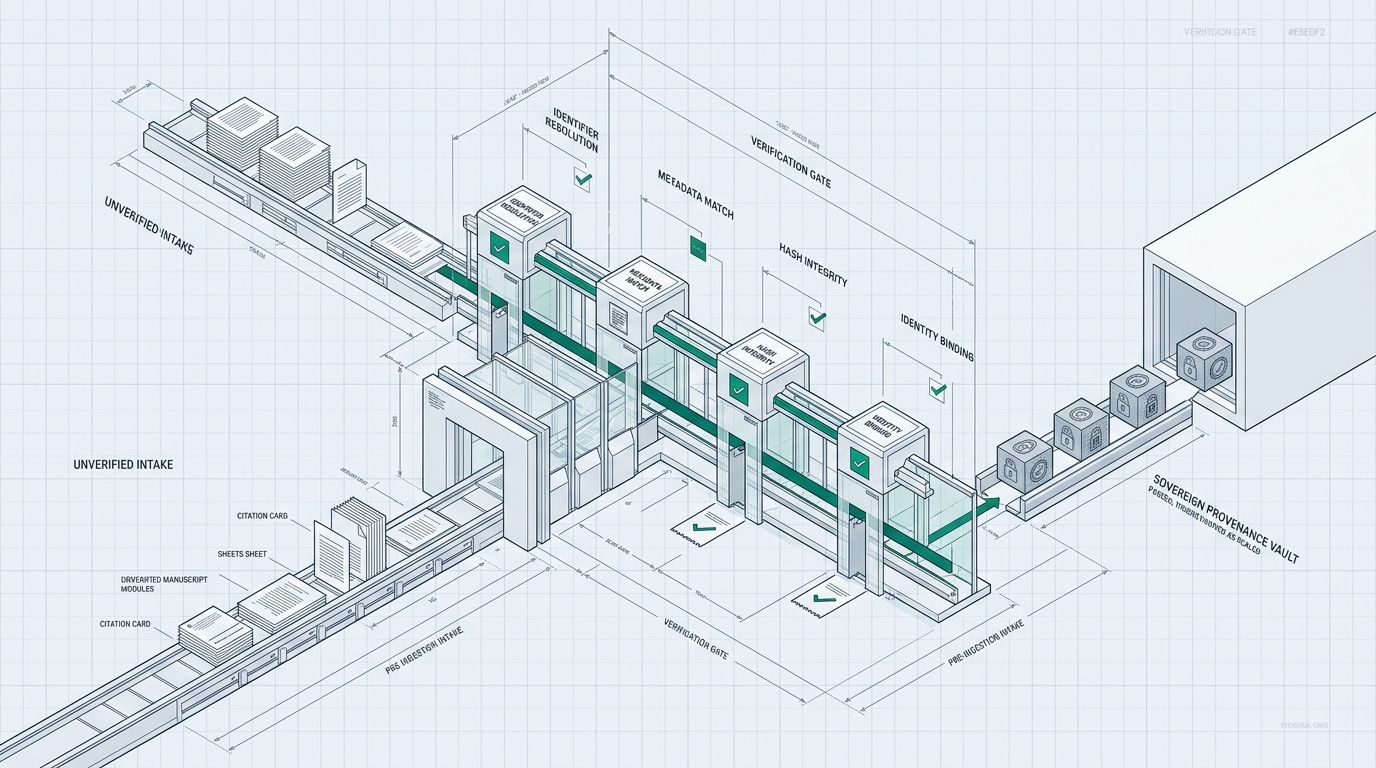
Detection tells you that you have a problem. Proof tells you who, what, and when. This is the case for signed, content-addressed custody of the scholarly record — held inside the institution's own trust boundary from ingestion onward.
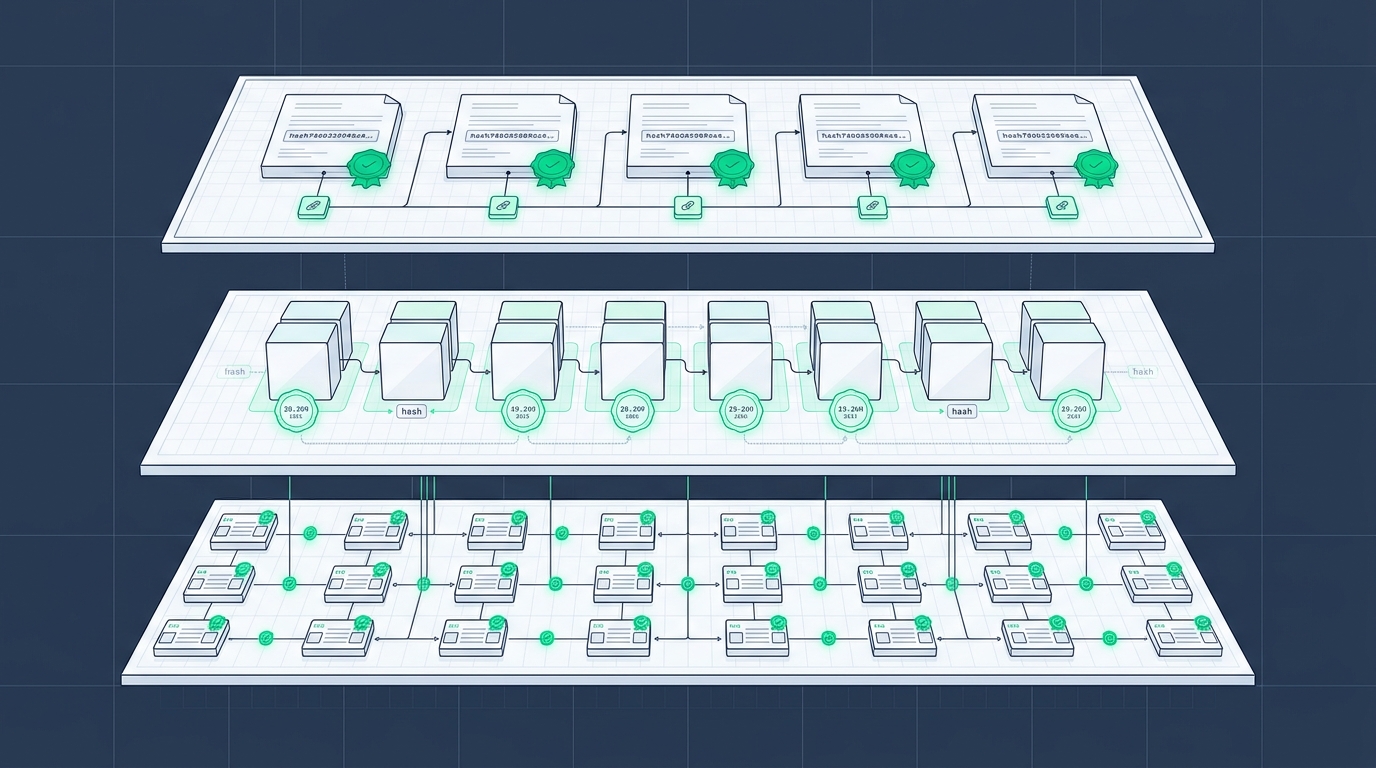
The Verification Gap: Research Integrity Is Infrastructure
Institutions do not lack AI detectors — they lack a verifiable chain of custody. Why the 21% AI-review finding is an audit failure, how tamper-evident provenance makes retraction clusters structurally impossible, and how deans, ORIC directors, and regulators can pilot verifiable research infrastructure this accreditation cycle.
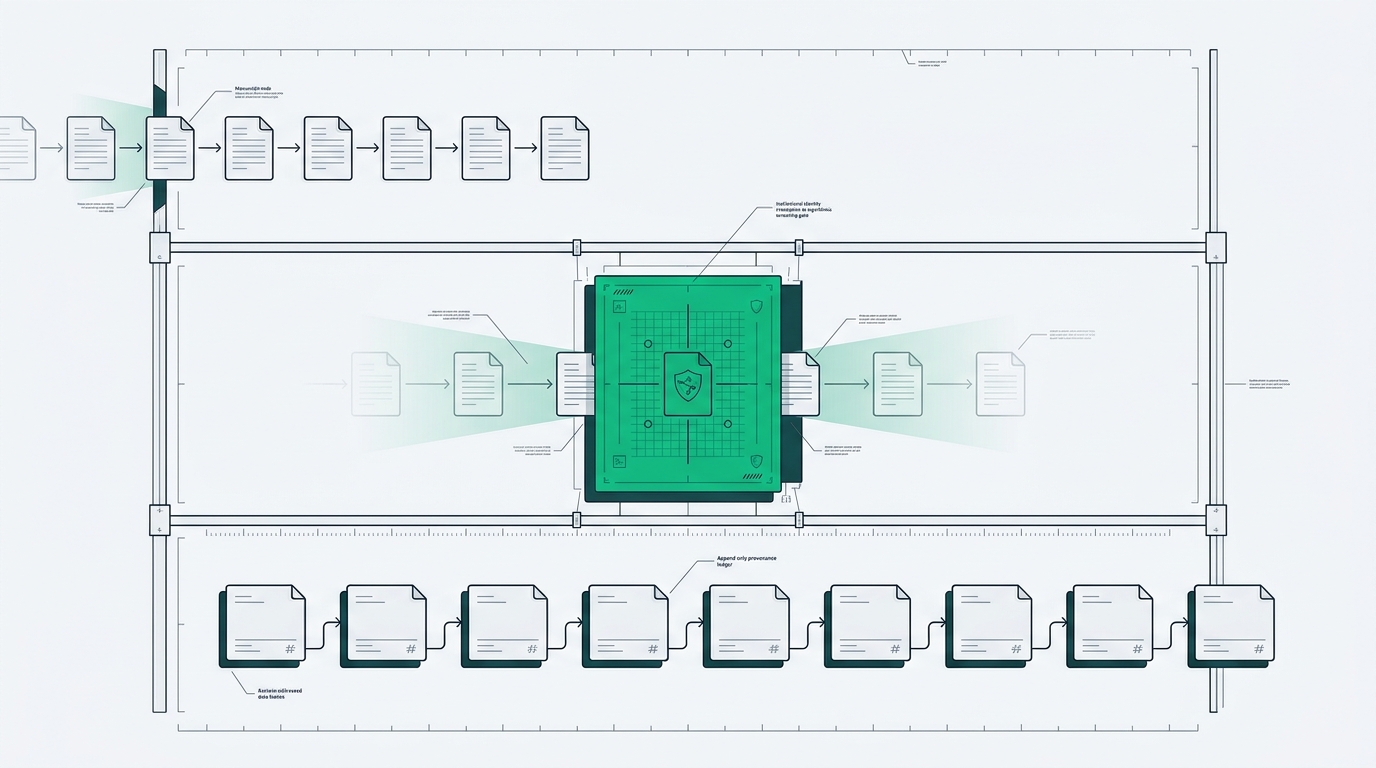
Peer Review Crisis? It's a Research Infrastructure Problem
More than eight million papers now enter a peer review system that can't verify who validated what. The fix is verifiable triage: identity-backed reviewers, screening at ingest, and audit-ready provenance—installed at the institutional layer, not bolted onto editorial software.