July 26, 2026
Why Pakistan’s Inter-Bank Audit Trails Are a Ticking Time Bomb
Beneath the surface of Pakistan's rapid banking digitization lies a structural vulnerability: alterable audit logs. Discover why manual log reconstruction is a systemic risk and how cryptographic sealing at the point of creation is the necessary solution.

Pakistan’s banking sector is undergoing a rapid, undeniable digital transformation. From the rollout of RAAST to the licensing of digital banks and the explosive growth of branchless banking, the infrastructure powering the country’s economy is moving faster than ever.
But beneath this surface of innovation lies a structural vulnerability that very few are talking about publicly. It is not a new malware strain, and it is not a lack of firewalls.
It is the fragility of the inter-bank audit trail itself.
Every single day, millions of inter-bank API calls, settlement instructions, and digital transactions occur between Pakistani financial institutions. Every one of these events generates a record—a log entry in a database. These logs are the foundation of dispute resolution, regulatory compliance, and fraud investigation.
The problem is how these logs are created, stored, and verified.
The Illusion of Immutable Logs
When a dispute arises between two banks—perhaps a contested digital payment or a failed settlement—the standard procedure is to initiate a manual reconstruction of records. Technical teams pull logs from core banking systems, switch databases, and API gateways. Legal and compliance teams spend weeks, sometimes months, cross-referencing these fragmented data points to determine what actually happened.
This process operates on a dangerous assumption: that the logs themselves are untampered and represent absolute truth.
In reality, the vast majority of enterprise databases powering today’s financial systems are relational and retrospective. They are designed for high-speed retrieval, not cryptographic integrity. An administrator with sufficient privileged access can alter, delete, or fabricate log entries. Even in the absence of malicious intent, the sheer complexity of synchronizing microservices across different banking architectures means logs can be inconsistent, overwritten, or lost entirely during system failures.
When disputes escalate to legal proceedings or regulatory scrutiny, banks are forced to present "evidence" that is structurally fragile. Opposing parties can challenge the integrity of the data. Regulators are forced to trust the self-reported logs of the institutions they are supposed to oversee.
This is not just an operational inefficiency. It is a systemic risk. It costs institutions massive amounts in legal resources, delays dispute resolution, and creates a blind spot for regulators like the State Bank of Pakistan (SBP).
The Regulatory Blind Spot
SBP has been highly proactive in issuing cyber security guidelines and pushing for IT governance frameworks. However, compliance mandates often focus on preventing access (like zero-trust architectures) rather than proving the integrity of the data after a transaction has occurred.
As global financial systems move toward stricter data integrity standards, Pakistani institutions relying solely on traditional, alterable logging will find themselves at a severe disadvantage. The cost of retrofitting legacy core banking systems to fix this at the database level is astronomical and operationally impossible without years of downtime. Banks cannot afford to shut down their operations to rebuild their logging architecture from scratch.
The Shift from Reconstruction to Sealing
The solution to this time bomb is not better log management software. It is a fundamental shift in how financial records are generated.
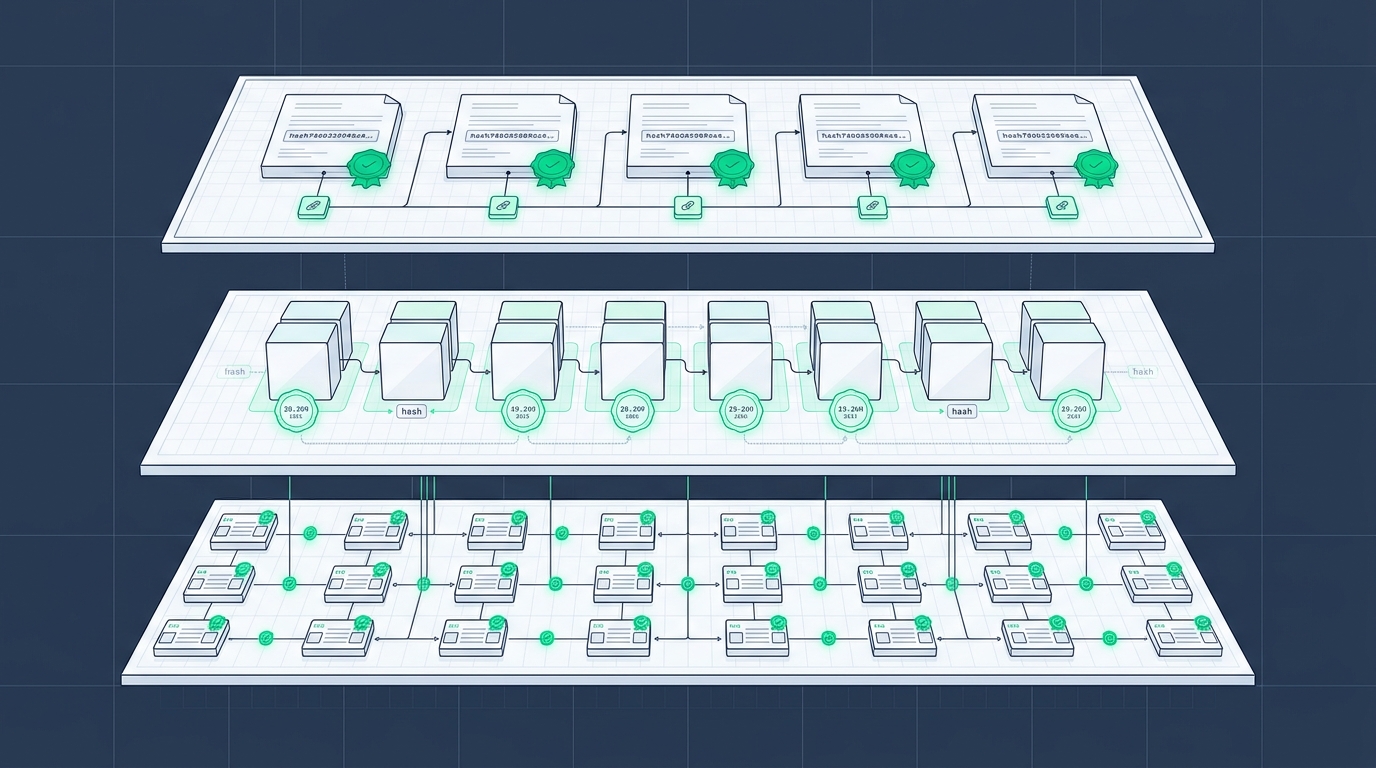
Instead of reconstructing evidence after the fact, the industry must move toward cryptographic sealing at the point of creation. Imagine if every inter-bank API call generated a mathematically verifiable receipt the millisecond the transaction occurred. A receipt that is permanently anchored to an independent ledger, impossible to alter retroactively, and exportable for regulatory review with a single click.
If a dispute arises, there is no weeks-long investigation. There is no he-said-she-said between IT departments. There is only the cryptographic proof.
This is not a theoretical concept. It is an engineering reality. At @DecentraSec, we engineered QuantumOSX specifically to close this gap in financial infrastructure. It is a completed, ready-to-deploy infrastructure layer that wraps around existing banking systems—requiring zero legacy code rewrites—and generates these immutable, blockchain-anchored audit receipts in under 5 milliseconds.
The digitization of Pakistan's economy is an achievement to be proud of. But as the volume of transactions scales, the infrastructure verifying those transactions must scale in integrity, not just speed. The time to fix the audit trail is before the next major dispute happens, not after.
References & Citations:
State Bank of Pakistan. (2026). Operating Rules for PRISM+ (Pakistan Real-time Interbank Settlement Mechanism Plus).* Retrieved from https://www.sbp.org.pk/assets/document/C1-Annex_2.pdf
State Bank of Pakistan. (2026). What's New: Revised Operating Rules for PRISM+.* Retrieved from https://archive.sbp.org.pk/whatnew/whatsnew.asp
State Bank of Pakistan. (2021). Cyber Security – Emerging Trends, Challenges, and Policy Response (Box 8.1, Financial Stability Review 2021).* Retrieved from https://www.sbp.org.pk/assets/document/Cyber_Security_Emerging_Trends_Challenges_and_Policy_Response_FSR_2021.pdf
World Bank. (2022). Pakistan RAAST Case Study. (Content not retrieved, but URL provided for reference). Retrieved from https://fastpayments.worldbank.org/sites/default/files/2022-05/Pakistan_RAAST_Case_Study_%20May_2022.pdf
CurrencyResearch. (2026). Pakistan's Journey Toward a Digital Payments Ecosystem. Retrieved from https://cbpn.currencyresearch.com/blog/2026/01/23/pakistans-journey-toward-a-digital-payments-ecosystem
Facebook Post by Pakistan Banks Association. (2026). Pakistan's retail payments have never been more digital. Retrieved from https://www.facebook.com/PakistanBanksAssociation1/posts/pakistans-retail-payments-have-never-been-more-digital-lets-make-that-progress-c/122252881424138080
02 // RELATED RESEARCH · ARCHIVE DISPATCHES
Related Papers & Dispatches.
Peer-reviewed analyses, cryptanalysis papers, and zero-trust engineering dispatches.

National Launch of ScholarMark: DecentraSec and PASTIC Unveil Pakistan’s First Sovereign AI & Blockchain Research Integrity Infrastructure
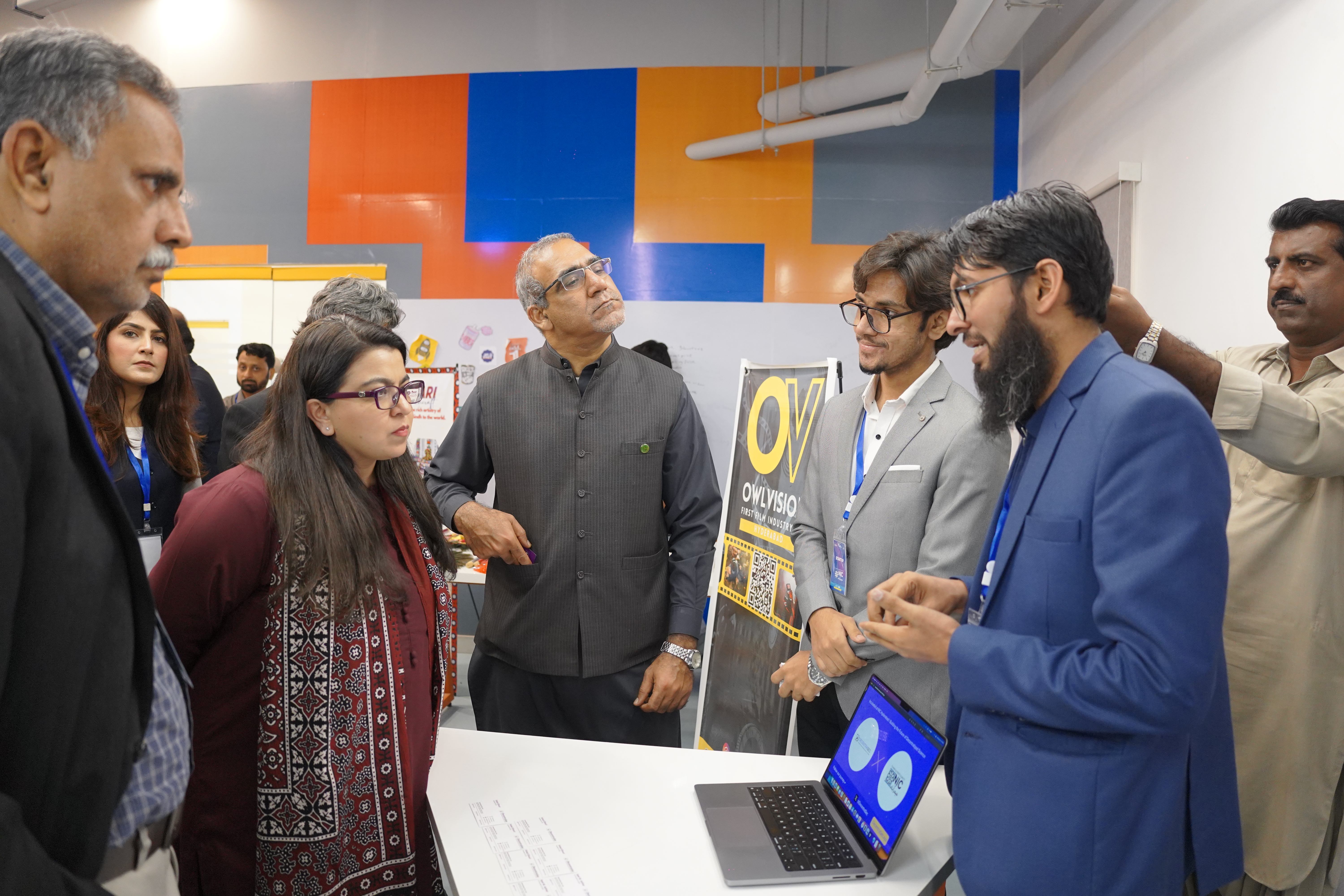
On October 21, 2026, DecentraSec and PASTIC (Ministry of Science & Technology) convened national science leaders, university deans, ORIC directors, and journal editors at NICAT (NASTP), Islamabad, to officially launch ScholarMark—a sovereign deep-tech platform designed to eliminate research manipulation, protect intellectual property, and secure Pakistan’s knowledge economy.
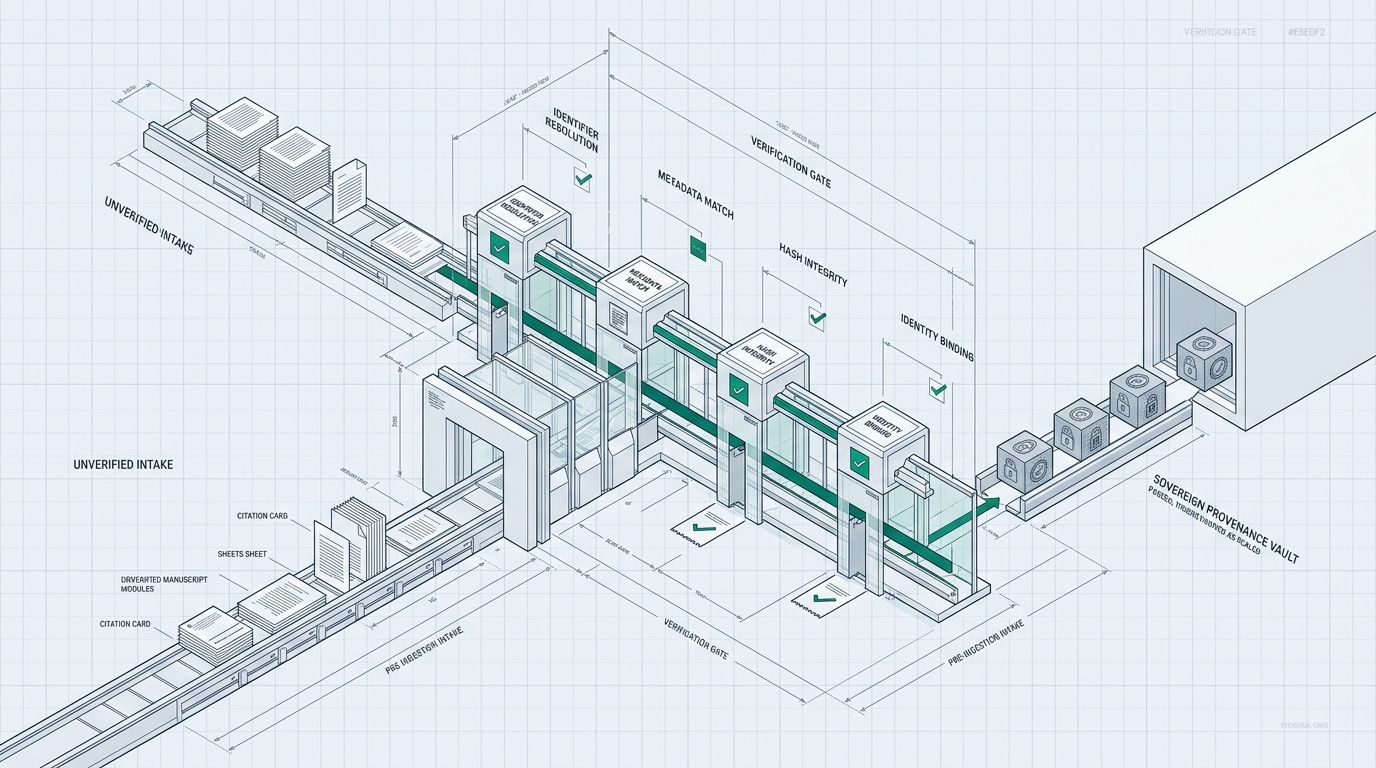
Research Integrity Infrastructure: Pre-Ingestion Checks
Research integrity failures are infrastructure failures. This post outlines pre-ingestion verification, appeal-aware records, and sovereign provenance for academic institutions.
The Verification Gap: Research Integrity Is Infrastructure
Institutions do not lack AI detectors — they lack a verifiable chain of custody. Why the 21% AI-review finding is an audit failure, how tamper-evident provenance makes retraction clusters structurally impossible, and how deans, ORIC directors, and regulators can pilot verifiable research infrastructure this accreditation cycle.